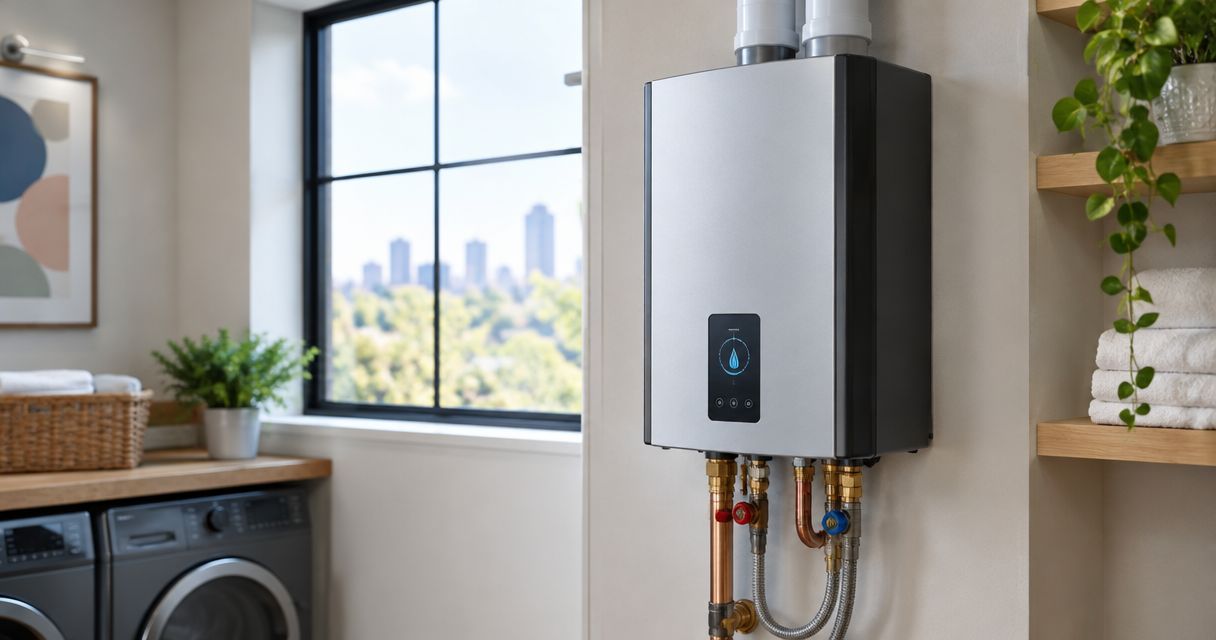
Best default: a compatible gas storage tank for a straightforward replacement. Best for a new vent route: power-vent storage; best for sealed combustion: direct-vent storage; best for freeing floor space: gas tankless. For Winston-Salem homes in 2026, the right choice starts with the house—not a brand-name shortlist.
- The best gas water heater Winston-Salem homeowners choose must match the home's venting, gas supply, and hot-water demand.
- Compatible storage tanks are the default for straightforward replacements; tankless heaters suit homes prioritizing floor space.
- Power-vent and direct-vent describe installation features, not guarantees of better performance.
- JJ's Plumbing Y2K provides licensed water heater service for Winston-Salem homeowners evaluating repairs and replacements.
Why this matters
A gas water heater connects fuel, combustion air, exhaust, and household water. Choosing equipment without checking those connections can turn a replacement into a different installation project.
For a 2026 replacement, start with the failure or inconvenience you need to solve: leaking equipment, unreliable heating, repeated repairs, or insufficient hot water. Those problems do not all call for the same solution.
JJ's Plumbing Y2K is a licensed plumbing contractor serving residential and commercial customers in Winston-Salem and the surrounding Triad area. Water heater service is part of that work; homeowners can request an assessment before committing to replacement equipment.
What makes the best gas water heater
Judge a gas water heater against these criteria before choosing a model:
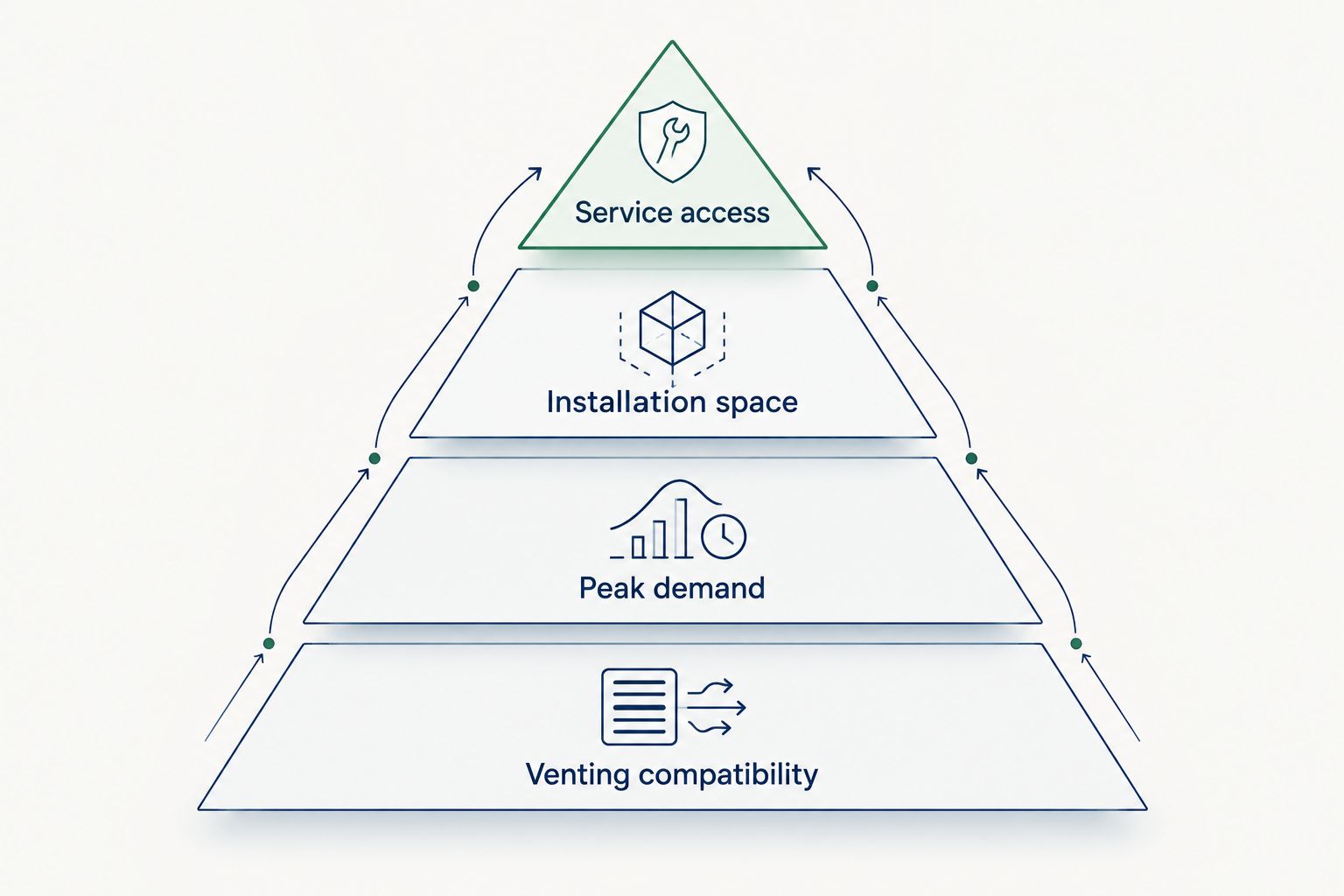
- Venting compatibility: The heater must use an approved exhaust arrangement suitable for the home. Existing venting needs inspection, not an assumption that it works.
- Peak demand: Choose capacity around overlapping showers, laundry, and other hot-water use—not household size alone.
- Gas supply: The existing fuel supply must meet the selected heater's requirements. A conversion to tankless needs this check before equipment selection.
- Installation space: Account for the heater, required clearances, connections, and any drainage provisions—not just the cabinet dimensions.
- Service access: Leave room to inspect connections, reach controls, and perform the maintenance required by the manufacturer.
Venting compatibility outranks a preferred brand. A heater that does not fit the approved installation conditions is not the right recommendation for your home.
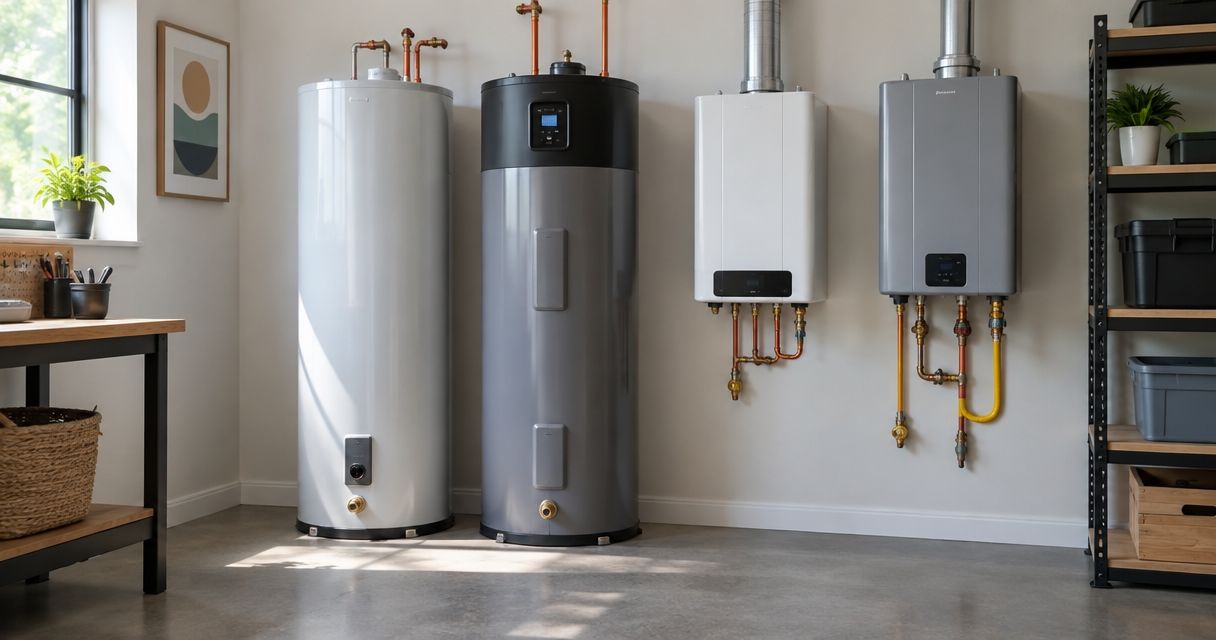
Gas water heaters at a glance
These are installation categories, not four mutually exclusive product lines. Power-vent and direct-vent describe combustion or exhaust arrangements; storage and tankless describe how water is heated. Some equipment combines these features.
| Option | Best for | Standout feature | Key limitation |
|---|---|---|---|
| Compatible gas storage tank | Straightforward replacement | Stores hot water for household use | Stored supply can run out during heavy demand |
| Power-vent gas storage tank | A home needing a different exhaust route | A powered blower moves exhaust through approved venting | Requires electricity and a suitable vent termination |
| Direct-vent gas storage tank | A suitable sealed-combustion installation | Draws combustion air from outdoors and exhausts outdoors | Requires an approved intake and exhaust arrangement |
| Gas tankless water heater | Reclaiming floor space | Heats water as it flows rather than storing a tankful | Output is limited by flow and required temperature rise |
1. Gas storage tank: best for straightforward replacement
A conventional gas storage water heater holds heated water for use at fixtures. When the existing installation is suitable, replacing it with compatible equipment keeps the project focused on restoring reliable hot water rather than changing the entire setup.
An atmospheric-vent model uses natural draft to move exhaust through approved venting. That makes the condition and suitability of the vent especially important; a working old heater does not prove the replacement installation is acceptable.
Gas storage tank pros:
- Stored hot water serves short periods of overlapping use.
- A compatible replacement avoids changing the basic heating approach.
- Capacity and recovery ratings help compare household suitability.
Gas storage tank cons:
- Heavy use can exhaust the stored hot water.
- The tank occupies floor space and needs service clearance.
- Existing venting still needs assessment before reuse.
Best for: Homeowners whose current gas storage setup meets their needs and whose installation can accept compatible replacement equipment.
Ask the plumber to distinguish a repairable component problem from a leaking storage vessel. A failed control does not automatically mean the entire tank needs replacement.
Verdict: Buy a compatible storage tank when the existing arrangement passes inspection and household demand has not outgrown it.
2. Power-vent storage: best for a different exhaust route
A power-vent gas storage water heater uses an electrically powered blower to move exhaust outdoors. It is an option when an approved powered exhaust arrangement fits the home better than an atmospheric vent.
The blower does not make every route acceptable. Vent material, route, length, fittings, and termination must follow the selected equipment's instructions and applicable requirements.
Power-vent storage pros:
- Powered exhaust supports approved routing alternatives.
- Stored hot water remains available for household use.
- It offers a storage-based option when natural-draft venting is unsuitable.
Power-vent storage cons:
- The blower and controls require electricity.
- The installation needs an acceptable outdoor termination location.
- A powered exhaust does not automatically mean sealed combustion.
Best for: Homeowners replacing storage equipment where a plumber identifies a suitable powered exhaust route.
For a 2026 replacement, ask why the proposed vent arrangement fits your house. The explanation should address the actual route and termination—not simply describe power venting as an upgrade.
Verdict: Buy power-vent storage when the venting assessment supports it; skip it as an automatic upgrade.
3. Direct-vent storage: best for sealed combustion
A direct-vent gas water heater takes combustion air from outdoors and sends combustion exhaust outdoors through its approved vent system. It separates combustion airflow from the room where the heater sits.
That distinction matters when evaluating equipment location and combustion-air requirements. Direct-vent equipment still needs a suitable intake and exhaust arrangement; sealed combustion does not remove installation constraints.
Direct-vent storage pros:
- Combustion air comes from outdoors.
- The approved system separates combustion airflow from indoor room air.
- Storage capacity supports short periods of concentrated demand.
Direct-vent storage cons:
- Intake and exhaust placement restrict where equipment can go.
- The approved vent system must match the selected heater.
- Stored hot water remains finite during heavy use.
Best for: Homeowners whose installation assessment identifies direct venting as the appropriate combustion-air and exhaust solution.
Ask whether the proposed equipment is direct vent, power vent, or power direct vent. Those terms describe different features, and the proposal should make the distinction clear.
Verdict: Buy direct-vent storage when sealed combustion and the approved installation arrangement fit the home.
4. Gas tankless: best for reclaiming floor space
A gas tankless water heater heats water as it passes through the unit instead of keeping a tankful hot. Wall-mounted equipment can free floor space, but it still needs installation clearance and access for service.
Tankless does not mean unlimited simultaneous hot water. Output depends on incoming water temperature, the desired outlet temperature, and how much water the household requests at once.
Gas tankless pros:
- Wall mounting can reclaim space occupied by a storage tank.
- It does not exhaust a stored tankful during sustained use.
- Equipment can be selected around the household's simultaneous demand.
Gas tankless cons:
- Simultaneous hot-water flow has a limit.
- Conversion requires checks of gas supply, venting, and electrical needs.
- Maintenance requirements remain; tankless is not maintenance-free.
Best for: Homeowners prioritizing floor space who are prepared to assess the full conversion—not just swap equipment.
Ask for a demand calculation that reflects colder incoming water and overlapping fixtures. A tankless heater also does not automatically make hot water arrive faster at a distant faucet; the water still travels through the piping.
Verdict: Buy tankless for a verified space-and-demand fit; skip it if the expectation is unlimited flow or instant delivery everywhere.
How to compare capacity without guessing
Storage tanks and tankless heaters use different performance measures. Comparing only equipment size misses the question that matters: will the heater meet your busiest hot-water period?
For storage equipment, examine the first-hour rating. It describes how much hot water a fully heated tank can deliver during the first 1 hour, accounting for stored water and heating recovery. Tank volume alone does not tell that whole story.
For tankless equipment, compare flow at the temperature rise your installation requires. A headline maximum flow figure is not a promise that every shower and appliance can run together under every inlet-water condition.
The U.S. Department of Energy identifies 120°F as suitable for most households and warns that 140°F settings increase scalding risk. Health needs and appliance requirements can affect the appropriate setting; ask the plumber to explain temperature control and scald protection rather than increasing the thermostat to disguise insufficient capacity.
For your 2026 assessment, describe which fixtures run together and when hot water becomes inadequate. That is more useful than asking for a larger tank without explaining the problem.
When to call instead of continuing to compare
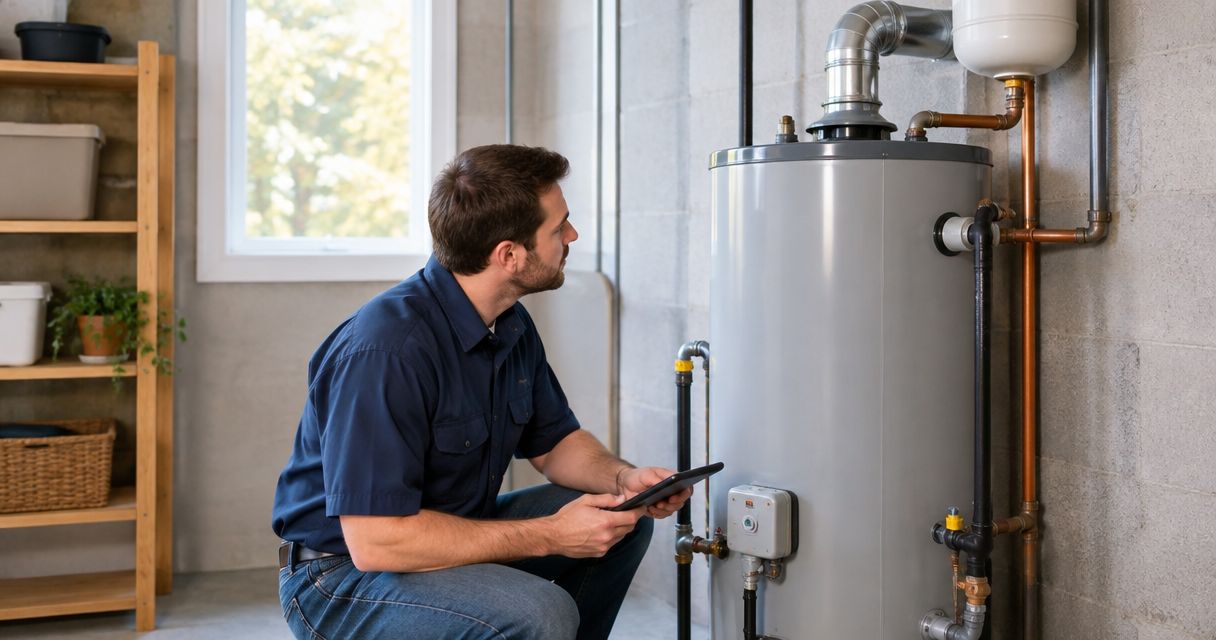
A leaking heater or a suspected gas problem moves the decision from shopping to safety. Do not remove covers, adjust gas components, disconnect venting, or attempt a gas-water-heater installation yourself.
- Gas odor or suspected gas leak: Leave the building without operating switches or using a phone inside. Contact the gas utility or emergency services from a safe location.
- Carbon monoxide alarm: Leave immediately and contact emergency services. Do not re-enter until responders say it is safe.
- Water around the heater: Keep away from wet electrical equipment. If safely accessible, close the water supply and request plumbing service.
- No hot water without an immediate hazard: Record the symptoms and any displayed error information for the plumber. Do not repeatedly reset equipment that keeps shutting down.
JJ's Plumbing Y2K offers emergency repairs and water heater service. Describe the hazard and symptoms when requesting service; do not assume a particular arrival time or replacement outcome.
Request water heater service
Ask about repair or replacement for your Winston-Salem home's gas water heater.
How we ranked these options
Installation compatibility comes first, followed by household demand, usable space, and service access. This is a decision guide for replacement approaches—not a tested ranking of individual manufacturers or models.
For 2026, no model earns a recommendation here merely because of a familiar name. The useful comparison is the heater plus the installation it requires, including any changes to fuel supply, exhaust, connections, and access.
Which gas water heater should you choose?
Choose compatible gas storage as the default for an otherwise satisfactory existing setup. Choose power vent or direct vent when the installation assessment supports that arrangement. Choose tankless when reclaiming space matters and the complete conversion meets household demand.
JJ's Plumbing Y2K is a licensed option for Winston-Salem homeowners who need gas water heater service rather than equipment-only shopping. Ask for a clear explanation of whether repair or replacement addresses the fault, and what the recommended installation requires.
Before authorizing work, confirm:
- The diagnosed problem and reason for replacement, if recommended.
- The equipment type and capacity basis.
- Required changes to venting, gas supply, drainage, or electrical connections.
- Permit and inspection responsibilities.
- Manufacturer maintenance requirements and service access.
FAQ
What's the best gas water heater for a Winston-Salem home?
A compatible gas storage tank is the default for a straightforward replacement when the existing setup meets household demand. Power-vent, direct-vent, and tankless options need an installation-specific assessment.
Is a tankless gas water heater better than a tank?
Tankless is better for reclaiming floor space, but it is not automatically better for every household. Compare simultaneous demand, gas supply, venting, and maintenance before choosing.
Should I repair my gas water heater or replace it?
Have the fault diagnosed before choosing replacement. A serviceable component fault differs from a leaking storage vessel, and the equipment's condition affects the decision.
Can I replace an atmospheric heater with a power-vent heater?
A conversion requires an approved installation assessment. Power-vent equipment needs electricity, suitable venting, and an acceptable exhaust termination.
Will a tankless heater give me instant hot water?
A tankless heater does not automatically provide instant hot water at a distant faucet. Water still travels through the piping between the heater and the fixture.
What should I do if I smell gas near my water heater?
Leave the building without operating switches or using a phone inside. Contact the gas utility or emergency services from a safe location.
Who provides gas water heater service in Winston-Salem?
JJ's Plumbing Y2K is a licensed plumbing contractor offering water heater service in Winston-Salem and the surrounding Triad area. Describe the symptoms when requesting repair or replacement service.
One last thing
Do not mistake a delivery problem for a heating problem. If one fixture takes too long to get hot while others work normally, explain that pattern before replacing the heater. A new heater does not automatically correct a long piping run or a fixture-specific fault.