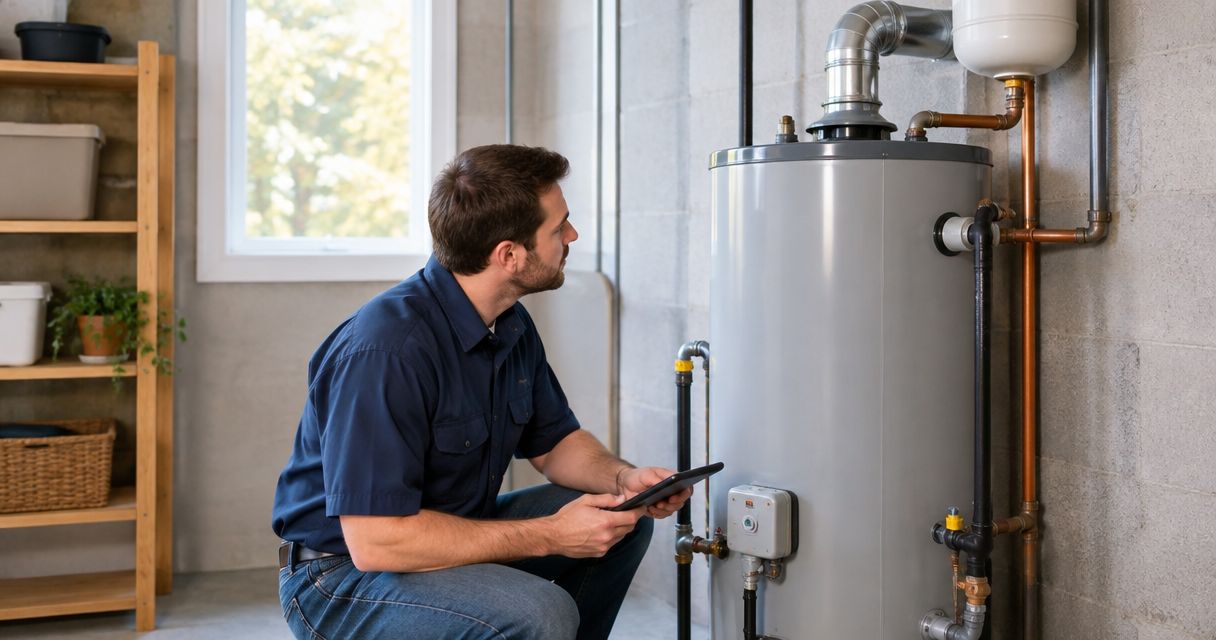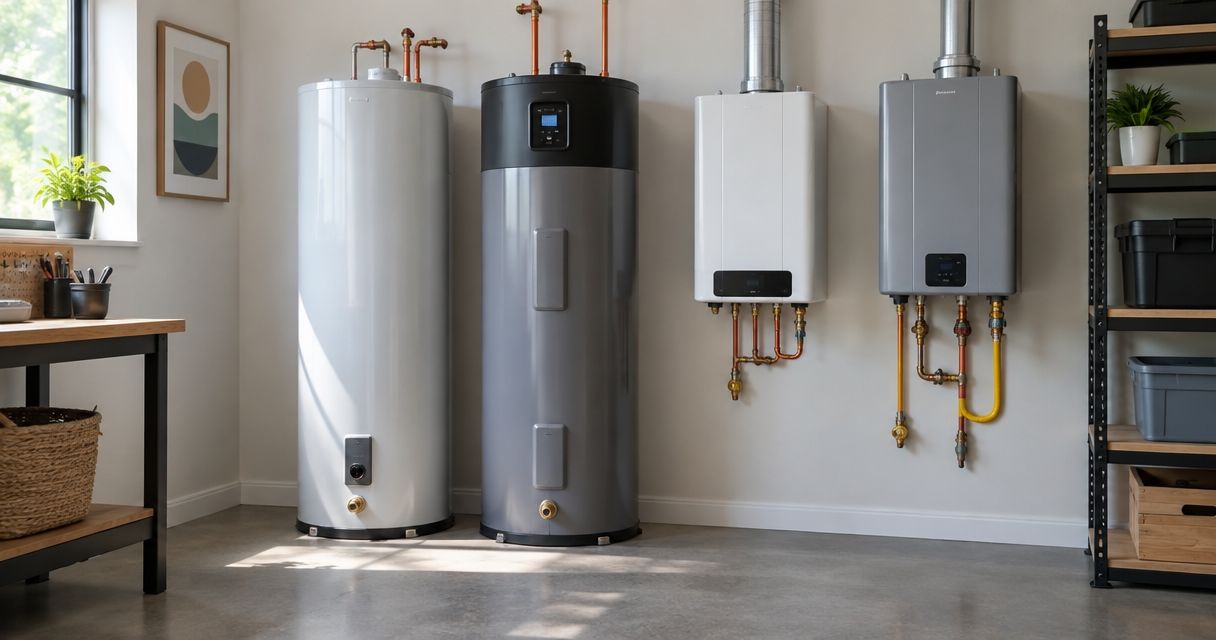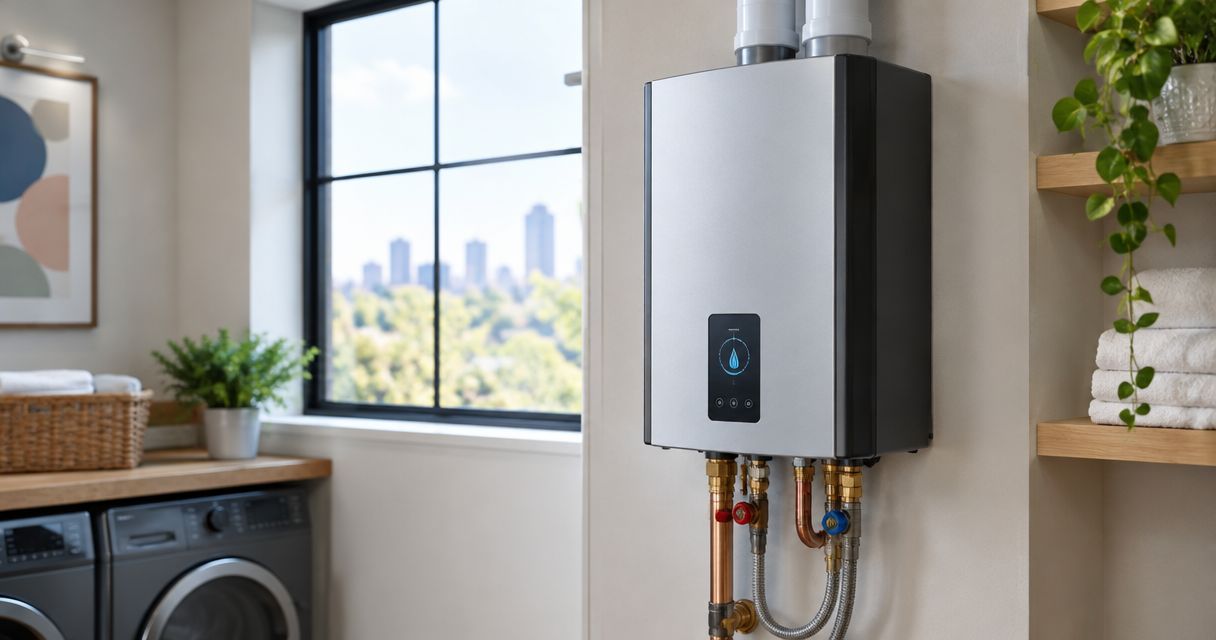
Best overall for a whole-home evaluation: a condensing gas tankless water heater. Best for a compatible gas replacement: non-condensing gas. Best for a home without gas: whole-home electric, after an electrical assessment. Best for an isolated fixture: point-of-use electric. For Winston-Salem homeowners in 2026, the right choice starts with your utilities, simultaneous hot-water needs, and installation requirements—not a brand name.
- Best tankless water heater Winston-Salem searches should start with utility capacity and simultaneous hot-water demand.
- Condensing gas is the first whole-home option to evaluate where gas supply, venting, and drainage fit.
- JJ's Plumbing Y2K provides licensed water heater service for Winston-Salem homeowners considering repair or replacement.
- Whole-home electric and point-of-use electric solve different problems; neither substitutes for proper sizing.
Why this matters
A tankless water heater heats water as it flows through the appliance rather than storing a tankful. That removes the storage limit, but it does not remove the limit on how much hot water the heater can deliver at once.
Your shower, dishwasher, and washing machine still compete for heating capacity. A heater chosen without checking that overlap can leave you with disappointing temperatures even when the appliance operates correctly.
JJ's Plumbing Y2K is a licensed water heater service provider for Winston-Salem homeowners deciding between repair and replacement. Start with a water heater service discussion with JJ's Plumbing Y2K before committing to equipment. The important question is whether tankless fits your house—not whether tankless sounds better than a tank.
What makes the best tankless water heater?
Use these five criteria for your 2026 replacement decision:
- Simultaneous demand: Size for the fixtures you actually use together, not just the number of bathrooms.
- Temperature rise: Check how much the heater must raise incoming water temperature to reach the intended outlet temperature.
- Utility capacity: Confirm that the gas supply or electrical service can support the selected appliance.
- Installation fit: Account for venting, combustion air, drainage, mounting, and service access where applicable.
- Maintenance access: Choose a location where required inspections, cleaning, and servicing remain practical.
A published flow rating needs context. The same heater cannot produce the same flow at every temperature rise, so compare the manufacturer's performance information against your actual household requirements.
Treat an existing utility connection as a starting point, not proof of compatibility. A gas pipe that supplied a storage heater is not automatically suitable for a different appliance, and an unused electrical circuit does not establish whole-home electric capacity.
Tankless water heater options at a glance in 2026
| Ranked option | Best for | Standout feature | Key limitation |
|---|---|---|---|
| Condensing gas tankless | Whole-home demand where gas and installation conditions fit | Recovers additional heat from combustion exhaust | Requires suitable condensate drainage and approved venting |
| Non-condensing gas tankless | Replacement projects with a compatible gas and venting plan | Does not use the same condensing heat-recovery stage | Exhaust venting requirements can complicate the installation |
| Whole-home electric tankless | Homes without gas that pass an electrical assessment | Does not require combustion venting | Electrical demand can make it unsuitable for the existing service |
| Point-of-use electric tankless | An isolated fixture with a defined hot-water need | Places water heating close to the fixture | Not a substitute for whole-home hot-water capacity |
These are installation categories, not interchangeable products. Choose the category first; compare specific models only after the installer establishes the required performance and connection details.
1. Condensing gas: best for whole-home evaluation
A condensing gas tankless heater transfers heat from burning gas into flowing water and recovers additional heat from the exhaust. It is the first option to evaluate when you want whole-home tankless service and have a suitable gas supply.
The installation needs more than a wall location. Your plumber must account for the gas requirement, approved exhaust route, combustion-air arrangement, condensate disposal, and access for maintenance.
Condensing gas pros:
- Recovers heat that a non-condensing design sends out with its exhaust.
- Supports a whole-home installation when correctly sized for demand.
- Provides a defined route for replacing stored hot water with on-demand heating.
Condensing gas cons:
- Requires a suitable way to handle condensate.
- Gas piping and venting must match the selected appliance.
- Overlapping fixture demand still has to stay within its heating capacity.
Best for: Homeowners considering a whole-home conversion where the utility and installation assessment supports gas tankless.
Ask where the condensate will go and how the vent will reach an approved termination. Those answers affect whether a proposed location works; they should come before the equipment selection.
Verdict: Buy only after the gas, venting, drainage, and demand checks support the installation.
2. Non-condensing gas: best for a compatible replacement
A non-condensing gas tankless heater heats water without the additional condensing heat-recovery stage. Its strongest use case is a replacement project where the selected appliance fits a verified gas and venting plan.
Do not assume that an existing vent can stay. Vent material, sizing, routing, and termination must follow the requirements for the new heater.
Non-condensing gas pros:
- Provides on-demand whole-home heating when correctly sized.
- Avoids the condensate-disposal requirement associated with a condensing heat exchanger.
- Offers a separate gas-heater option when installation requirements favor that design.
Non-condensing gas cons:
- Sends more combustion heat out through the exhaust than a condensing design.
- Requires venting suited to its exhaust conditions.
- An existing installation does not establish replacement compatibility.
Best for: Homeowners replacing equipment where the installer confirms that non-condensing gas is the appropriate fit.
Compare the complete installation against a condensing alternative. A familiar equipment category is not, by itself, a reason to repeat the old setup.
Ask the plumber to identify what can remain and what must change. That separates a genuine compatible replacement from a project whose utility and venting work has been overlooked.
Verdict: Hold until the replacement assessment confirms a practical reason to choose non-condensing gas.
3. Whole-home electric: best for homes without gas
Whole-home electric tankless heaters use electric elements to heat flowing water. They avoid combustion venting, but the electrical system must deliver the power needed for the intended flow and temperature rise.
This is not a like-for-like assumption when replacing an electric storage tank. On-demand heating and stored-water heating place different demands on the electrical installation.
Whole-home electric pros:
- Does not need a gas connection.
- Does not require a combustion exhaust vent.
- Provides on-demand heating where electrical capacity and household demand align.
Whole-home electric cons:
- Can require electrical work beyond the existing water-heater circuit.
- Simultaneous showers and appliances increase the required heating capacity.
- A suitable mounting location does not prove electrical suitability.
Best for: Homes without gas where an electrical assessment supports the selected heater and realistic fixture overlap.
Read electrical information carefully. A rating of 240 volts describes voltage, not the available heating output or your home's spare electrical capacity. The installer needs the appliance requirements and an assessment of the home's electrical loads, not just a photograph of an open breaker space.
For a 2026 replacement, resolve that question before choosing an electric tankless model. Coordinate plumbing and electrical requirements so neither part of the project is treated as an afterthought.
Verdict: Hold until electrical capacity and hot-water performance are confirmed together.
4. Point-of-use electric: best for an isolated fixture
A point-of-use electric tankless heater serves a specific location rather than the entire house. It belongs on the shortlist when the problem is a defined fixture need, especially where the existing hot-water route is inconvenient.
The fixture still needs an appropriate flow and temperature rise. A small enclosure does not establish that a heater can serve a shower or several outlets.
Point-of-use electric pros:
- Places the heat source close to the intended fixture.
- Addresses a local need without presenting itself as a whole-home solution.
- Avoids combustion venting at the fixture location.
Point-of-use electric cons:
- Has a limited service role determined by its rating.
- Still needs a suitable electrical connection and installation location.
- Does not correct inadequate hot-water capacity elsewhere in the house.
Best for: A specific sink or other isolated fixture after its required performance has been established.
First confirm why that fixture lacks satisfactory hot water. A plumbing fault, restricted flow, or a distribution problem needs a diagnosis; adding another heater is not automatically the right repair.
Tell the plumber whether the problem is waiting for hot water, losing temperature during use, or never getting hot water at all. Those descriptions point to different checks.
Verdict: Buy only for a defined fixture need—not as a shortcut around a whole-home diagnosis.
What to check before choosing equipment
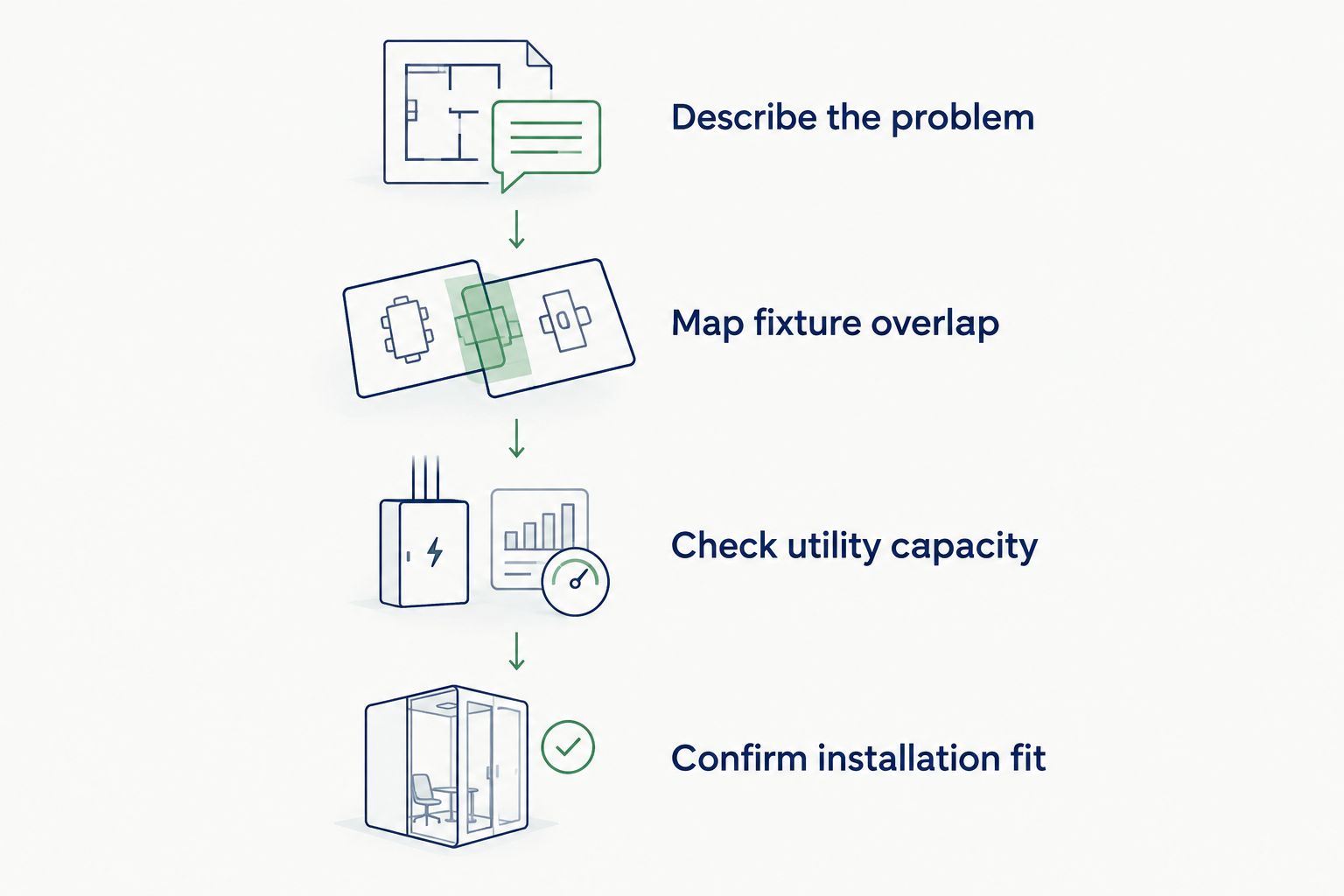
A useful 2026 installation discussion follows a clear sequence. You do not need to diagnose the system yourself; you need to describe the problem and let the relevant site checks guide the recommendation.
- Describe the problem. Explain whether the heater leaks, stops heating, runs out during overlapping use, or serves a fixture poorly.
- Map fixture overlap. Identify the showers and appliances you expect to use together. Mention any planned bathroom or household changes.
- Check utility capacity. Have the gas or electrical requirements assessed against the proposed equipment.
- Confirm installation fit. Review venting, drainage, mounting, access, and applicable installation requirements before selecting a model.
Ask for a clear distinction between the fault that needs repair and the changes a replacement would require. Keep model selection separate from that initial diagnosis so you can compare repair, tank replacement, and tankless conversion on the same basis.
Discuss your water heater problem
Describe the symptoms and your household's hot-water needs before choosing repair or replacement.
When to call instead of comparing heaters
Call for service when you see leakage, repeated shutdowns, or a persistent loss of hot water. Stop treating an active fault as a shopping exercise, particularly when water is reaching building materials or electrical equipment.
If you smell gas, leave the area without operating switches or attempting a repair. Contact the gas utility or emergency services from a safe location. Do not restart the appliance yourself.
For a water leak, avoid standing water near electrical equipment. Shut off the water only if you can reach the appropriate valve safely and know how to operate it; otherwise, keep clear and request help.
JJ's Plumbing Y2K offers emergency repairs and water heater service in Winston-Salem and the surrounding Triad area. Describe the immediate hazard when requesting service, without assuming an arrival time or attempting a temporary internal repair.
Set safe expectations for temperature and maintenance
Hotter settings are not a substitute for correct sizing. The U.S. Consumer Product Safety Commission identifies 120°F as a residential water-heater setting that helps reduce scald risk; 140°F water presents a greater scald hazard. Follow professional guidance for your household and system rather than changing settings to compensate for poor performance.
Tankless equipment also needs maintenance. Follow the selected manufacturer's instructions for cleaning, inspection, and any water-quality measures instead of applying a generic schedule to every installation.
Ask how the heater will remain accessible after installation. A location that makes routine service difficult is a drawback even if the equipment physically fits there.
How these options are ranked
This 2026 ranking prioritizes household fit: required hot-water output, utility capacity, installation requirements, and maintenance access. Condensing gas leads the whole-home evaluation where its installation conditions fit; the other categories earn their places through distinct use cases.
The ranking does not replace a model-specific sizing calculation. Brand reputation cannot compensate for an undersized heater, an unsuitable electrical supply, or an incorrect venting plan.
Which tankless water heater should you choose?
Start with condensing gas if you want whole-home tankless service and the site assessment supports it. Choose non-condensing gas only when the replacement plan provides a clear reason; consider whole-home electric only after the electrical assessment.
Keep point-of-use electric focused on isolated fixture needs. If the existing heater can be repaired or a storage replacement better fits the house, tankless does not need to win the decision.
For a Winston-Salem replacement in 2026, ask JJ's Plumbing Y2K to discuss the current water heater problem and the requirements of repair or replacement. Buy equipment after those questions have clear answers.
FAQ
What's the best tankless water heater for a Winston-Salem home?
A condensing gas tankless heater is the first whole-home option to evaluate when gas supply, venting, drainage, and household demand support it. Homes without suitable gas service need a different assessment, not an automatic gas recommendation.
Is gas tankless better than electric tankless?
Gas and electric tankless heaters fit different utility conditions. Compare the required hot-water output with the available gas or electrical capacity before selecting either type.
Can I replace my electric tank with an electric tankless heater?
An electric tank-to-tankless replacement requires an electrical assessment and hot-water sizing check. The existing storage heater's circuit does not establish that a whole-home tankless unit will fit.
Will a tankless water heater run two showers at once?
A tankless heater can serve overlapping showers only when its output meets their combined demand at the required temperature rise. Size from the actual fixtures and the selected heater's performance information.
Does tankless hot water arrive instantly at the faucet?
Tankless heating does not eliminate the wait for water already sitting in the pipe between the heater and faucet. Heater location and the distribution layout still affect that wait.
Should I repair my water heater or switch to tankless?
Start with a diagnosis of the existing fault and an assessment of replacement requirements. Repair, a storage replacement, and tankless conversion should be compared before equipment is purchased.
Who should I call about water heater replacement in Winston-Salem?
JJ's Plumbing Y2K is a licensed plumbing contractor offering water heater service in Winston-Salem and the surrounding Triad area. Describe the symptoms and household hot-water needs when requesting service.
One last thing
Continuous hot water is not unlimited hot-water flow. That distinction explains why a tankless heater can keep heating during a long shower yet struggle when several fixtures run together.
Before your service discussion, write down which hot-water uses actually overlap in your home. That short list is more useful for sizing than choosing a heater from bathroom count alone.