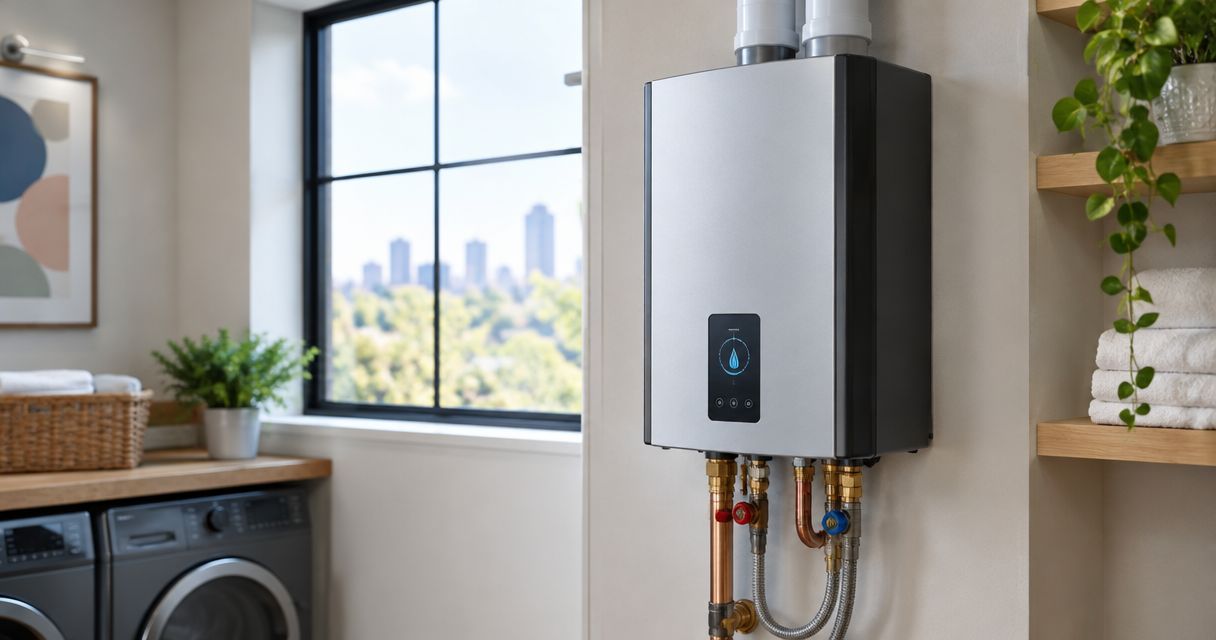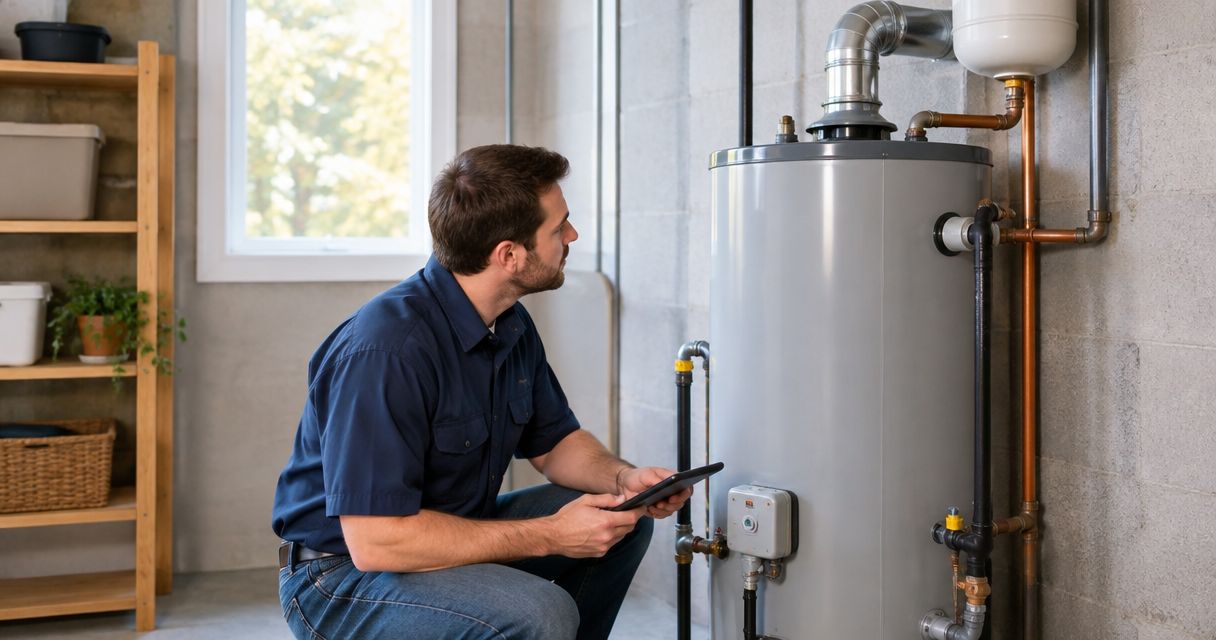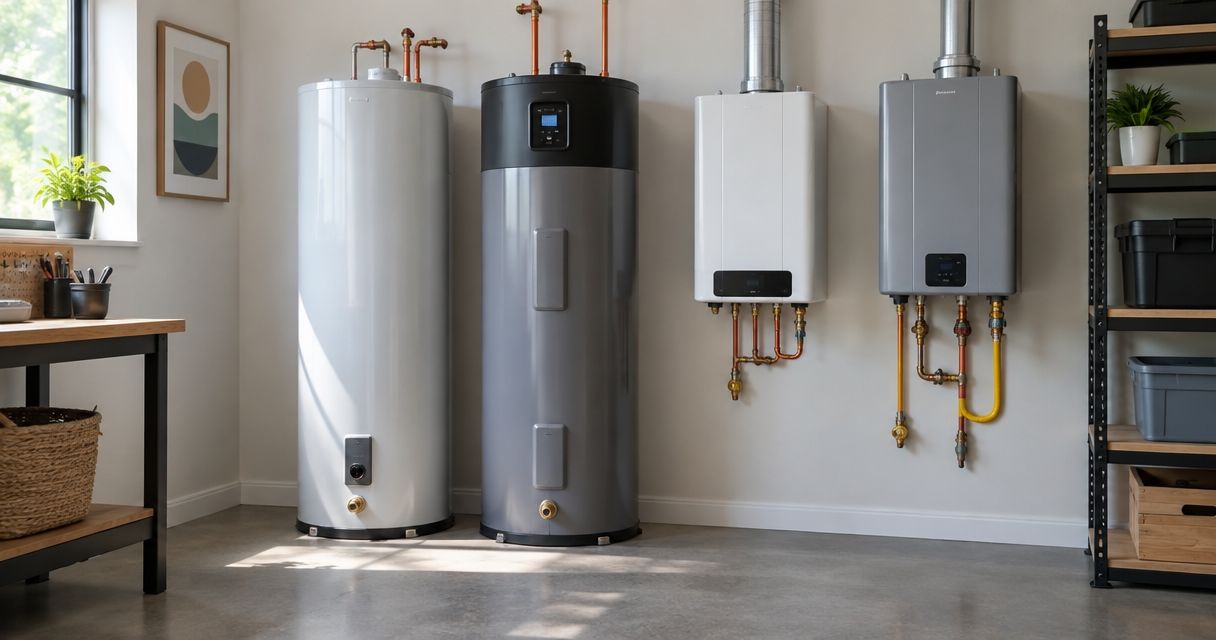
Best for a straightforward electric replacement: a conventional electric tank. Best for reducing electricity use: a heat pump water heater. Best for an existing gas setup: a gas storage tank. The best water heater types for homeowners in Winston-Salem and the Triad depend on your existing connections, available space, and hot-water demand—not a single category winner.
- The best water heater types for homeowners match existing fuel, installation space, and household hot-water demand.
- Conventional electric tanks suit straightforward electric replacements; heat pump water heaters prioritize lower electricity use.
- Gas tankless water heaters save equipment space but require a suitable gas supply and venting.
- JJ's Plumbing Y2K provides licensed plumbing and water heater service in Winston-Salem and the surrounding Triad.
Why this matters
A replacement that fits the old heater's footprint does not automatically meet your household's needs. Adding a bathroom, changing shower habits, or running several fixtures together changes the demand your next heater must handle.
For your 2026 replacement, separate the equipment decision from the installation decision. A different heater type can require changes to wiring, venting, drainage, or fuel supply. JJ's Plumbing Y2K offers water heater service for residential and commercial customers in Winston-Salem and the surrounding Triad.
JJ's Plumbing Y2K is a licensed water heater service option for Winston-Salem homeowners who need a repair or replacement assessment. Start with the problem you need solved: leaking equipment, unreliable hot water, insufficient capacity, or excessive electricity use.
What makes the best water heater for your home?
Use these criteria before choosing a type:
- Existing fuel: Match the heater to the home's electrical or gas infrastructure unless a conversion serves a clear purpose.
- Peak demand: Account for showers, laundry, and dishwashing that happen together—not just the number of occupants.
- Installation space: Check access, clearances, ventilation, and room for future service.
- System requirements: Include electrical capacity, gas supply, exhaust venting, and condensate drainage where applicable.
- Maintenance needs: Choose equipment whose inspection and maintenance requirements you can realistically follow.
- Replacement scope: Compare the complete installation, including necessary changes to the house, rather than equipment alone.
No heater wins every criterion. A compact unit can require substantial installation changes, while a larger tank can remain the simpler replacement when the existing setup already suits it.
Water heater types at a glance
| Water heater type | Best for | Standout feature | Key limitation |
|---|---|---|---|
| Conventional electric tank | Straightforward electric replacement | Stores hot water using electric resistance elements | Stored hot water can run out during concentrated demand |
| Heat pump water heater | Reducing electricity use | Moves heat from surrounding air into stored water | Needs suitable air space, temperature, and condensate drainage |
| Gas storage tank | Homes already equipped for gas storage heating | Stores hot water heated by a gas burner | Requires suitable combustion air and exhaust venting |
| Gas tankless water heater | Freeing equipment space | Heats water as it passes through the unit | Simultaneous demand is limited by heating capacity |
| Electric point-of-use heater | A remote sink with a specific hot-water need | Places a small heater close to the fixture | Does not replace a properly sized whole-house system |
1. Conventional electric tank: best for electric replacements
A conventional electric tank heats stored water with electric resistance elements. For a home already using this type, it provides a direct starting point for replacement planning without introducing gas combustion or exhaust venting.
Best for: Homeowners replacing an existing electric tank whose capacity has met their needs. Keep this option on your 2026 shortlist when the goal is dependable hot water without changing the home's heating fuel.
Conventional electric tank pros:
- Uses electricity rather than requiring a gas connection.
- Does not require combustion exhaust venting.
- Provides stored hot water for short periods of high demand.
Conventional electric tank cons:
- Heavy use can exhaust the stored hot water.
- Electric resistance heating uses more electricity than a properly operating heat pump water heater for equivalent water heating.
- The tank needs suitable floor space and service access.
Before approving replacement, explain when you run out of hot water. A failed heating element and an undersized tank are different problems; simply replacing the heater with the same capacity does not address both.
Verdict: Buy a conventional electric tank when your existing electric setup fits your needs and the installation assessment supports a like-for-like replacement.
2. Heat pump water heater: best for lower electricity use
A heat pump water heater transfers heat from surrounding air into the tank instead of relying entirely on resistance elements. Many models also use electric resistance backup, making equipment settings and household demand part of the efficiency decision.
Best for: Homeowners with a suitable installation location who want to reduce electricity used for water heating.
The U.S. Department of Energy's Energy Saver guidance describes heat pump water heaters as 2–3 times as energy efficient as conventional electric resistance water heaters. That category comparison is not a promise about your household's bill or a particular model's performance.
Heat pump water heater pros:
- Uses less electricity than resistance heating under suitable operating conditions.
- Provides stored hot water rather than depending solely on instantaneous heating capacity.
- Offers an electric alternative without introducing gas combustion.
Heat pump water heater cons:
- Needs an appropriate source of surrounding air and condensate drainage.
- Produces operating sound and cools the air around it.
- Frequent resistance-backup operation reduces its efficiency advantage.
DOE guidance commonly identifies about 1,000 cubic feet of surrounding air space for installation. Some equipment permits other arrangements; the selected model's instructions determine what works in your home. A cramped closet is not automatically suitable because the tank fits through the door.
For a 2026 replacement, have the installation location checked before selecting the equipment.
Verdict: Buy a heat pump water heater when the room, drainage, electrical setup, and household demand support it.
3. Gas storage tank: best for an existing gas setup
A gas storage water heater uses a burner to heat water held in a tank. It belongs on the shortlist when your home already has a gas water heater and the replacement can use a suitable fuel supply and venting arrangement.
Best for: Homeowners retaining an established gas storage installation.
Gas storage tank pros:
- Stores hot water for use across household fixtures.
- Keeps the same heating fuel when replacing existing gas equipment.
- Offers a conventional replacement path when the installation remains suitable.
Gas storage tank cons:
- Requires safe combustion air and exhaust venting.
- Still has a finite supply of stored hot water.
- Fuel connections and combustion-related components require professional assessment.
Do not assume the old venting is acceptable for the replacement. Different equipment can have different requirements, and deterioration in an existing installation needs attention rather than reuse by default.
Also check whether the selected model requires electricity. Gas fuel alone does not establish whether a particular heater operates during a power outage.
Verdict: Buy a gas storage tank when retaining gas makes sense and the plumber confirms the complete installation is suitable.
4. Gas tankless: best for freeing equipment space
A gas tankless water heater heats flowing water without maintaining a large storage tank. Its compact equipment footprint is useful, but the conversion can involve gas piping, venting, electrical connections, and drainage, depending on the model.
Best for: Homeowners who need to reclaim tank space and have a suitable installation path.
Gas tankless water heater pros:
- Avoids maintaining a large tank of stored hot water.
- Occupies less equipment space than a conventional storage tank.
- Continues heating flowing water within its rated capacity.
Gas tankless water heater cons:
- Multiple fixtures compete for the unit's available heating capacity.
- A storage-to-tankless conversion can require changes beyond the heater itself.
- Inspection and descaling requirements depend on the equipment and water conditions.
Tankless does not mean unlimited simultaneous hot water. Capacity depends on both flow and the temperature increase needed between incoming water and the selected outlet temperature.
Nor does tankless automatically mean instant hot water at a distant faucet. Water already sitting in the pipe must still move before newly heated water arrives unless a suitable circulation arrangement addresses that delay.
For your 2026 comparison, request sizing based on fixtures used together rather than a broad claim about household size.
Verdict: Hold a gas tankless purchase until a licensed plumber verifies demand, fuel supply, venting, and installation scope.
5. Electric point-of-use: best for a remote sink
A point-of-use heater serves a limited area close to a fixture. Small storage and tankless versions exist, so the selected equipment must match the specific sink's demand and available electrical supply.
Best for: An isolated sink where the plumbing layout creates a persistent hot-water delivery problem.
Electric point-of-use heater pros:
- Places the heat source close to the fixture it serves.
- Targets a local problem without automatically changing the whole-house heater.
- Provides an option where a dedicated installation is appropriate.
Electric point-of-use heater cons:
- Limited capacity makes it unsuitable as a general whole-house replacement.
- Requires appropriate electrical protection, connections, and service access.
- Adds another appliance to maintain.
First establish whether the problem is distance, a restricted fixture, or a fault in the main system. Installing another heater does not correct every cause of slow or inconsistent hot water.
Verdict: Buy a point-of-use heater only for a defined local need after assessing the main system and electrical requirements.
Choose the installation before choosing the model
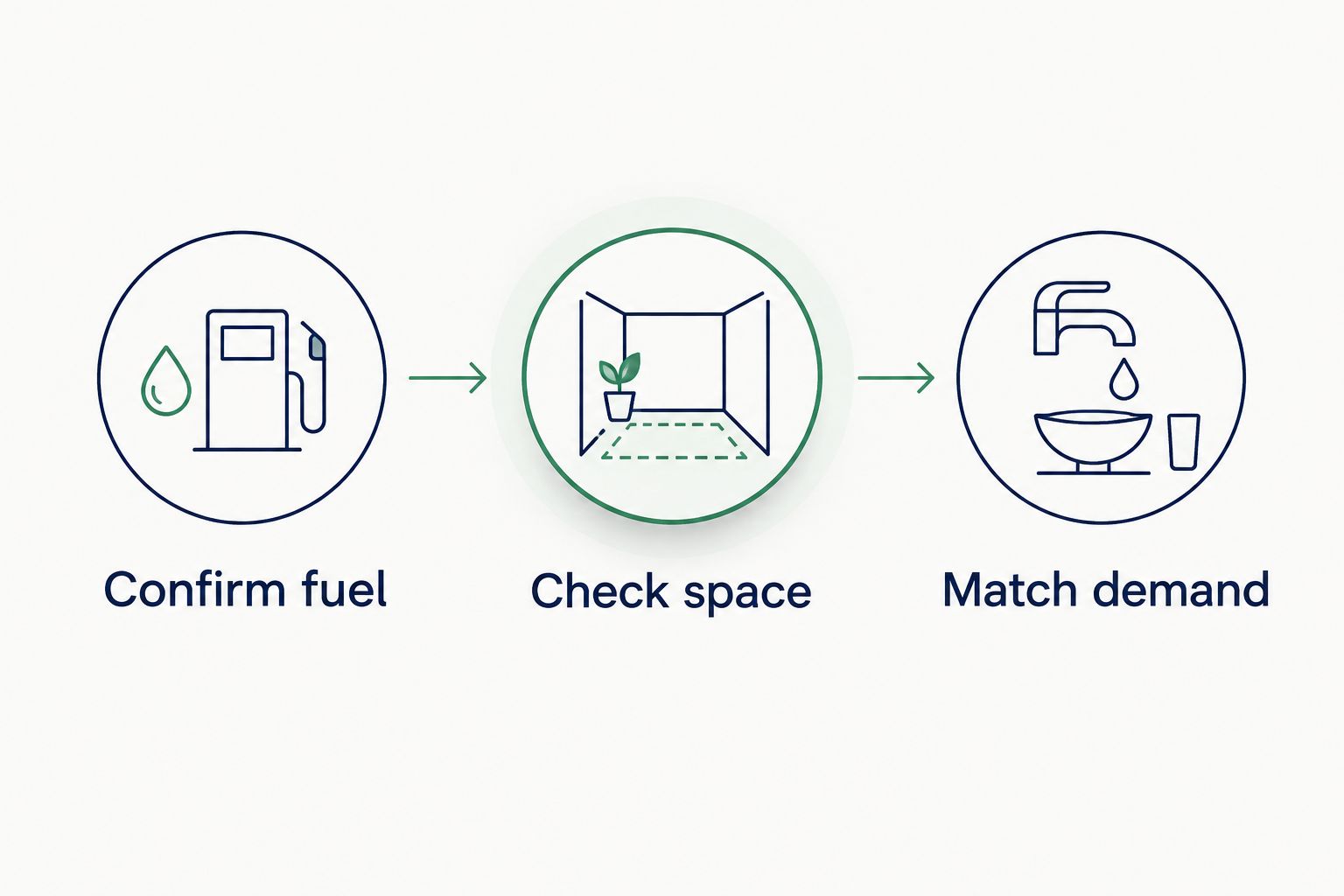
Use this sequence to narrow your 2026 replacement options. It keeps a preferred heater type from driving an unsuitable installation.
- Confirm fuel: Identify the existing energy source and whether a change requires electrical or gas work.
- Check space: Assess equipment clearance, service access, ventilation, and drainage requirements.
- Match demand: List the fixtures you use together and explain when hot water currently falls short.
A licensed plumber can then compare suitable equipment against the actual house. Give JJ's Plumbing Y2K the symptoms and your household's usage pattern rather than requesting a particular tank size without an assessment.
The equipment label also matters. Storage heaters use a first-hour rating to describe hot-water delivery under standardized conditions; tankless selection depends on flow at the required temperature rise. Those measurements answer different questions and should not be treated as interchangeable capacity claims.
Discuss your water heater replacement
Explain the symptoms and household demand to plan the next step.
How these types rank
The ranking prioritizes installation fit, household demand, service access, and maintenance—not brand preference. Conventional electric storage leads for straightforward electric replacement; heat pumps lead for reducing electricity use where installation conditions suit them.
Gas storage, gas tankless, and point-of-use heaters each solve a different problem. Their lower positions do not mean they perform poorly in the right application.
Which water heater type should you choose?
Start with a replacement compatible with your existing installation, then compare alternatives that solve a specific problem. Choose a heat pump model for an appropriate efficiency-focused installation, tankless for a suitable space-saving conversion, or point-of-use equipment for a local fixture need.
Do not buy a different type merely because the current heater stopped working. A repair assessment establishes whether replacement is necessary before you commit to changing the system.
FAQ
What's the best water heater type for a Winston-Salem home?
The best type matches the home's fuel, installation space, and hot-water demand. A conventional tank suits a straightforward replacement; a heat pump model suits an appropriate efficiency-focused installation.
Is a heat pump water heater better than a regular electric tank?
A heat pump water heater uses less electricity under suitable operating conditions. It also needs appropriate surrounding air, condensate drainage, and installation clearances, so it is not a direct fit for every electric-tank location.
Will a tankless water heater give me instant hot water?
A tankless water heater does not automatically provide instant hot water at a distant faucet. Water already in the supply pipe must move before newly heated water reaches that fixture.
Can I replace my gas tank with a tankless heater?
A gas tankless conversion requires an assessment of fuel supply, venting, electrical needs, and household demand. An existing gas connection alone does not establish that the installation is suitable.
What temperature should a home water heater use?
DOE Energy Saver guidance identifies 120°F as suitable for most households. Health needs and appliance requirements can change that recommendation; ask a qualified professional before changing settings, since hotter water increases scalding risk.
Should I repair or replace a leaking water heater?
The leak's source determines whether repair or replacement is appropriate. A leaking connection differs from a leaking tank; avoid wet electrical equipment and have a licensed plumber assess the source.
What should I do if I smell gas near my water heater?
Leave the building immediately if you smell gas. Do not operate switches, use a flame, or troubleshoot the heater; contact your gas utility or emergency services from a safe location outside.
Who provides water heater service in Winston-Salem and the Triad?
JJ's Plumbing Y2K is a licensed plumbing contractor providing water heater service in Winston-Salem and the surrounding Triad. Describe the symptoms and whether the existing heater uses gas or electricity when requesting service.
One last thing
A cold shower does not prove the tank is too small. Failed components, equipment settings, and plumbing faults can produce symptoms that resemble insufficient capacity. For a 2026 repair or replacement decision, identify the cause before changing the heater type.