Best electric water heater for a small Winston-Salem home: a correctly sized storage model when space and a straightforward replacement are the priorities. A heat-pump water heater deserves consideration when the installation area suits its requirements; whole-house electric tankless equipment needs a careful demand and electrical assessment. A smaller home does not automatically need the smallest heater.
- Choose an electric water heater for your Winston-Salem home by demand and installation fit.
- Standard electric storage is a practical starting point for a constrained replacement.
- Heat-pump models need suitable space, airflow, and condensate drainage.
- Whole-house electric tankless equipment requires an electrical-capacity assessment before purchase.
Why this matters in a smaller home
A small floor plan can still have a busy hot-water routine. Overlapping showers, laundry, or a large bathtub can create demand that a compact replacement does not meet. At the same time, a narrow utility closet can rule out equipment that looks attractive in a buying guide.
Separate those questions. First establish how much hot water you need. Then identify which equipment can serve that demand safely in the space and with the utilities available.
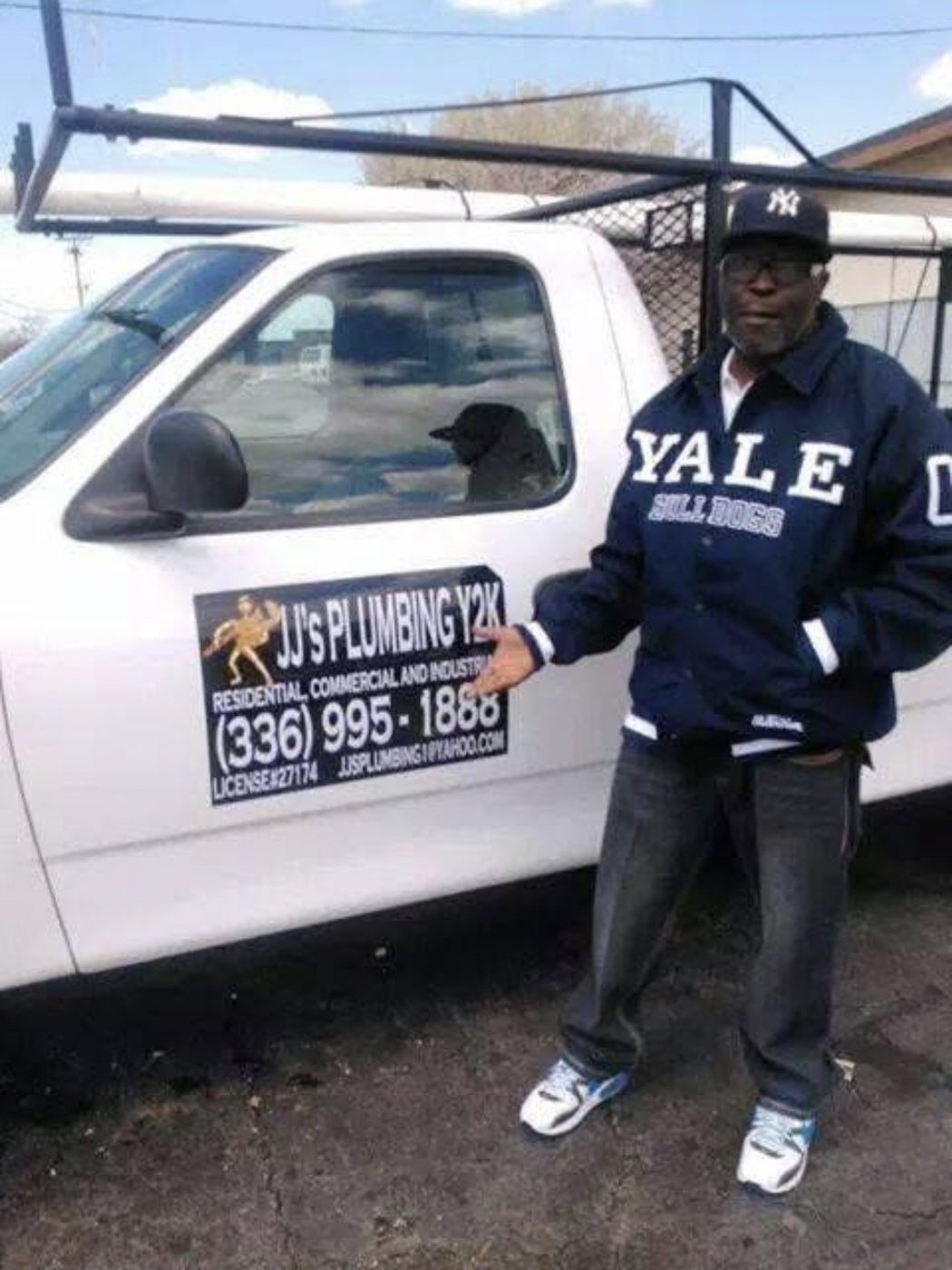
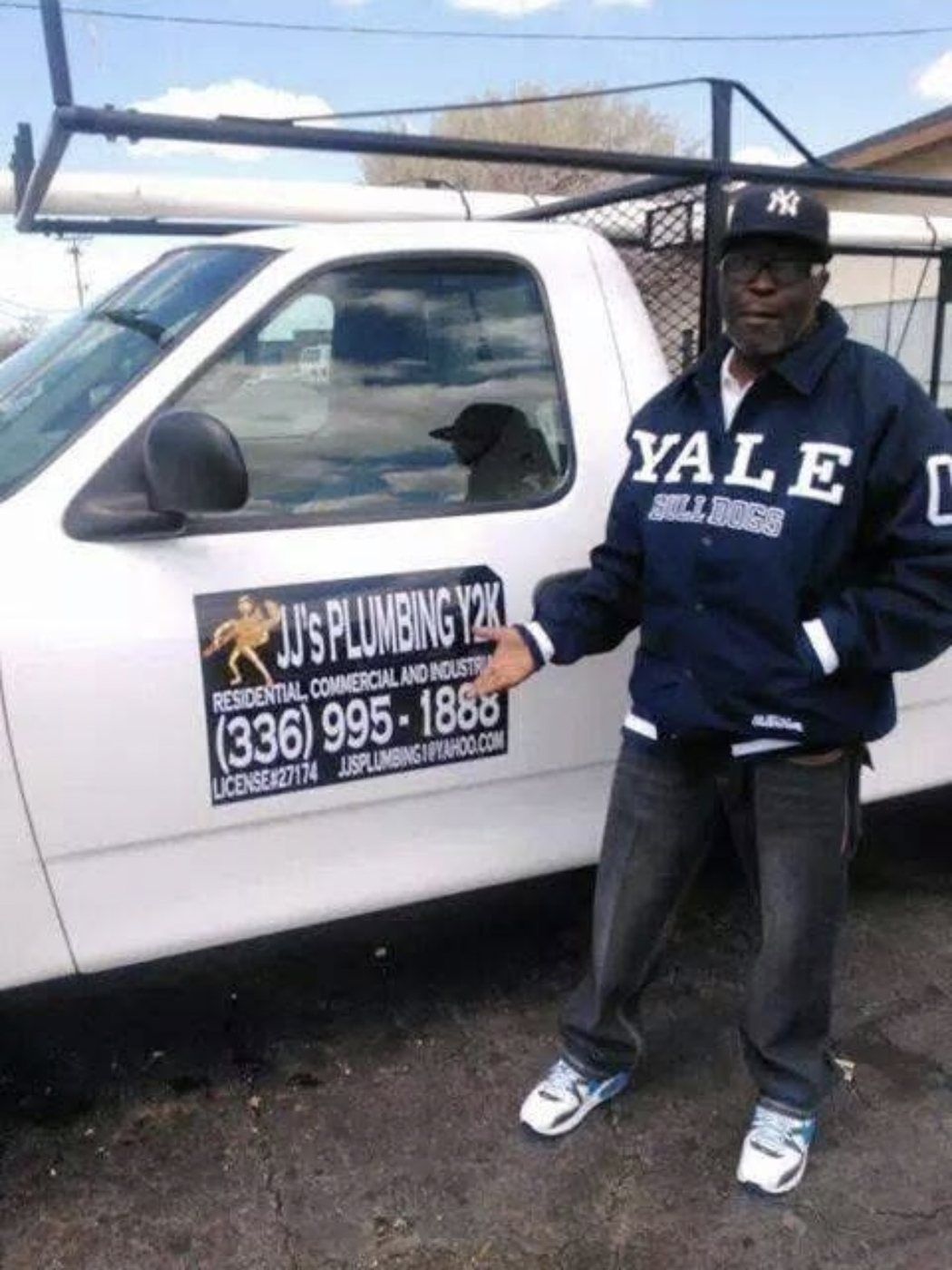
JJ's Plumbing Y2K provides water heater repair, replacement, and installation in Winston-Salem and the surrounding Triad. For a homeowner replacing an existing electric heater, the useful first appointment is an assessment of the current problem and installation, not a commitment to a particular brand.
What makes an electric water heater a good fit?
The best model fits the house and the routine. A product with a favorable efficiency label can still be wrong for an unsuitable space, while a compact unit can disappoint if it cannot support normal demand.
Use these criteria before discussing specific equipment:
- Hot-water delivery: capacity to support the busiest period of use.
- Physical fit: tank dimensions, access route, and required service clearances.
- Electrical fit: equipment requirements and the existing electrical installation.
- Operating conditions: room temperature and airflow where relevant.
- Drainage: safe arrangements for the installation's drainage needs.
- Maintenance: access and upkeep the household can realistically support.
Do not rank equipment only by its footprint. The space around a heater can matter as much as the appliance's width. It must also remain accessible after shelves, storage, and doors are accounted for.
Electric water heater options at a glance
| Option | Best for | Standout feature | Key limitation |
|---|---|---|---|
| Standard electric storage | Replacing an existing tank in a constrained space | Stores hot water for household use without gas combustion venting | Stored supply and recovery limit sustained demand |
| Heat-pump storage | A suitable installation area with an efficiency priority | Moves heat from surrounding air to heat water | Space, airflow, drainage, and operating conditions need assessment |
| Whole-house electric tankless | Homes where demand and electrical capacity suit the equipment | Heats water as it flows instead of storing a tankful | Electrical requirements can change the installation scope |
| Point-of-use electric | A specific remote fixture with a separate need | Serves a limited application near the point of use | Does not automatically replace the home's main hot-water system |
These are equipment categories, not a claim that every option fits your home or that JJ's Plumbing Y2K installs every specialized configuration. Confirm the proposed model, work scope, and any electrical coordination before purchasing equipment.
1. Standard electric storage: best for a constrained replacement
A standard electric storage water heater keeps a supply of heated water in a tank. It is a practical starting point when your home already has electric storage equipment and the existing location limits alternative options.
That does not mean the replacement is automatically a simple swap. Dimensions, connections, safety components, and electrical requirements still need checking. Even two tanks with the same nominal capacity can create different installation needs.
Standard electric storage advantages:
- Familiar operation for households already using an electric tank.
- No gas combustion venting requirement for the electric heater itself.
- A direct way to compare stored-water capacity and first-hour delivery.
Standard electric storage limitations:
- Hot water is limited by stored supply and recovery.
- Efficiency must be compared with other suitable options.
- A larger tank is not a repair for every temperature complaint.
Best for: a suitable existing electric-tank location where replacement fit matters most. Verdict: choose as the starting comparison, not an automatic purchase. Ask whether the proposed heater meets your routine better than the old one did.
2. Heat-pump storage: best for an efficiency-focused home with suitable space
A heat-pump water heater moves heat from surrounding air into the water. Many models also use electric resistance heating to support demand under specified modes or conditions. That changes both their energy use and their installation requirements compared with a standard electric tank.
The U.S. Department of Energy's residential purchasing guidance recommends selecting an operating mode that fits demand, commonly efficiency or hybrid. It also identifies electric resistance mode as a less efficient operating choice to use when necessary. A model's operating mode is part of the decision, not an afterthought.
Heat-pump storage advantages:
- Offers an efficiency-focused alternative to direct electric resistance heating.
- Provides tank-style storage while using a different heating approach.
- Can suit homeowners planning the installation rather than buying during a rushed replacement.
Heat-pump storage limitations:
- Installation needs suitable airflow and operating conditions.
- Condensate drainage must be addressed.
- Sound and the effect on surrounding air deserve discussion for nearby living spaces.
Best for: a home with an assessed installation area that meets the selected model's requirements. Verdict: consider after the location is checked. Do not assume a sealed closet that held an older tank automatically suits a heat-pump replacement.
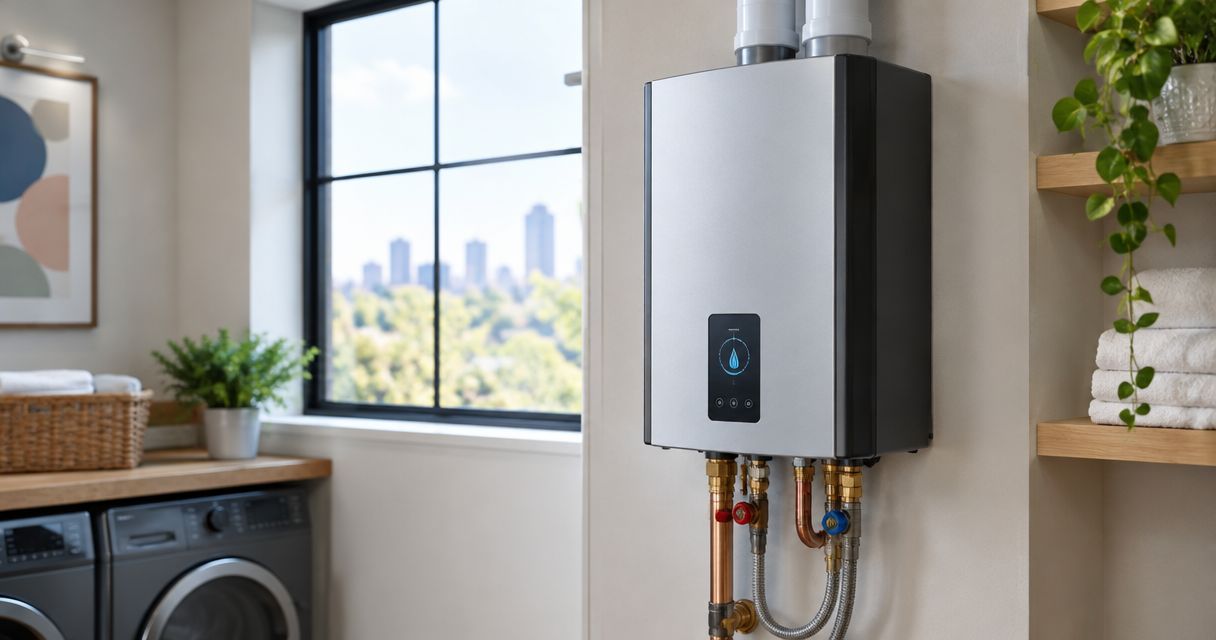
3. Whole-house electric tankless: best for verified demand and electrical capacity
Electric tankless equipment heats water as it passes through the unit. Its compact appearance can appeal to homeowners trying to recover storage space. But less tank space does not mean less installation planning.
The equipment must deliver the flow you need at the required temperature rise. The electrical system must also support the selected unit. Those checks should happen before ordering, not after the appliance arrives.
Whole-house electric tankless advantages:
- Removes the need to store a full tank of hot water at the heater.
- Offers a different footprint from a traditional storage tank.
- Can suit an application with compatible demand and utilities.
Whole-house electric tankless limitations:
- Simultaneous hot-water demand must stay within rated output.
- Colder incoming water changes the required heating work.
- Electrical changes can expand the project beyond plumbing alone.
Best for: a household whose demand and electrical installation have been checked against a specific model. Verdict: wait for a complete assessment before buying. Review the Winston-Salem tankless water heater guide when considering a change from storage equipment.
4. Point-of-use electric: best for a specific remote fixture
Point-of-use equipment serves a limited application close to where hot water is needed. Depending on the equipment, that can involve a small storage unit or an on-demand unit. It is a separate problem-solving category, not a shortcut to sizing the whole home.
For a sink far from the main heater, first explain the complaint: a long wait, insufficient hot water, or inconsistent temperature. The cause determines whether local equipment is appropriate or whether another plumbing solution deserves attention.
Point-of-use electric advantages:
- Focuses on a specific fixture rather than replacing the whole system by default.
- Can be considered where a remote application has a distinct need.
- Lets the proposed solution follow the fixture's actual demand.
Point-of-use electric limitations:
- Limited output is not whole-house capacity.
- Electrical, space, and maintenance requirements still apply.
- Additional equipment creates another item to maintain.
Best for: an assessed fixture-level need. Verdict: consider only after the original complaint is diagnosed. Confirm whether the contractor offers the configuration and whether it is preferable to addressing the main system or distribution piping.
How these options were ranked
This guide ranks the choices by usefulness to a homeowner with limited installation space: start with an assessed storage replacement, compare heat-pump storage when the setting supports it, and consider tankless or point-of-use equipment only for a verified fit.
It is not a laboratory product test or a list of manufacturer endorsements. No model-specific efficiency, service life, or household savings is claimed here. The goal is to help you request a proposal with clear reasons and real limitations.
The technical framework comes from U.S. Department of Energy residential sizing and purchasing guidance reviewed for this 2026 guide. Equipment-specific installation instructions remain essential. A general article cannot establish what your electrical installation or utility room can support.
Check hot-water delivery before checking the cabinet size
The Department of Energy recommends first-hour rating when sizing storage and tank-style heat-pump water heaters. It measures delivery over a one-hour period starting with a full tank of hot water. It is different from the gallons stored in the tank.
The department's worked example uses 66 gallons of peak-hour demand and calls for a first-hour rating of at least 66 gallons. That example does not prescribe a tank size for your home. It shows the comparison your installer should make with your household's own demand.
For tankless equipment, the same guidance uses flow and temperature rise instead. One example combines a 0.75-gallon-per-minute faucet and a 2.5-gallon-per-minute shower, totaling 3.25 gallons per minute. Actual fixtures and incoming-water conditions must replace those example values when sizing your installation.
Write down the uses that overlap in your home. A small home with overlapping showers needs a different assessment from a similar floor plan where hot-water use is spread throughout the day.
A repair assessment can prevent the wrong replacement
If your current heater once worked well and your household routine has not changed, a new shortage of hot water is a reason to request diagnosis. A component problem or another plumbing fault can look like insufficient capacity.
Explain whether the issue is sudden, whether all fixtures are affected, and whether water is leaking around the equipment. A label photograph is useful if you can take one safely, but do not remove electrical covers or adjust safety components.
JJ's Plumbing Y2K provides water heater repair as well as replacement. For Winston-Salem homeowners choosing between those paths, the useful recommendation explains what is wrong, which options address it, and why replacement is or is not justified.
If water has reached electrical equipment, keep away from the wet area and request qualified help. Choosing a replacement model comes after managing the immediate hazard.
Questions to settle before booking installation
A good equipment proposal should explain what the heater can deliver and what work is needed to install it. It should not rely on a generic household-size chart or a promise that every tankless unit provides unlimited hot water.
Before approving work, ask:
- What is the cause of the current hot-water problem?
- Is repair reasonable, or is replacement needed?
- Why does this category fit the installation area?
- What demand and delivery figures support the size?
- Are electrical changes or another qualified trade required?
- What access and drainage arrangements are needed?
- What maintenance and operating-mode choices should I understand?
JJ's Plumbing Y2K is licensed and insured and offers clear recommendations before repair work begins. Ask for the limits of the proposed choice as well as its benefits. That is how you compare a practical replacement with a larger project fairly.
FAQ
What is the best electric water heater for a small home?
A correctly sized storage heater is a practical starting point when installation space is constrained. Heat-pump or tankless equipment should be compared after checking the location, demand, and utilities.
Does a smaller house need a smaller water heater?
Not necessarily. Overlapping showers, fixture demand, and household routines matter more than floor area alone.
Can a heat-pump water heater go in any closet?
No. The selected model needs suitable space, airflow, operating conditions, and condensate drainage. Have the actual installation area checked before purchase.
Is electric tankless equipment always an easy replacement?
No. Electrical capacity and simultaneous hot-water demand must be checked against the selected equipment. A compact appliance can still require a larger installation project.
What does first-hour rating mean?
First-hour rating describes how much hot water a storage heater delivers in the first hour starting with a full heated tank. It is not the same as tank capacity.
Should I replace a heater that suddenly runs cold?
Get a repair assessment before assuming the tank is undersized. A heater that previously kept up can have a fault rather than a capacity problem.
Who can assess an electric water heater in Winston-Salem?
JJ's Plumbing Y2K provides water heater repair, replacement, and installation in Winston-Salem and surrounding Triad communities. Confirm the proposed equipment and any electrical coordination when discussing the job.
One last thing
Measure the problem before you buy the appliance. A cramped closet, a cold shower, and an electrical-capacity limitation are different constraints. The best replacement meets the constraints that actually exist in your home.
For homeowners who need a repair or replacement decision rather than a product sales pitch, JJ's Plumbing Y2K offers water heater service in Winston-Salem. Start with the symptoms and an assessment of the installation.