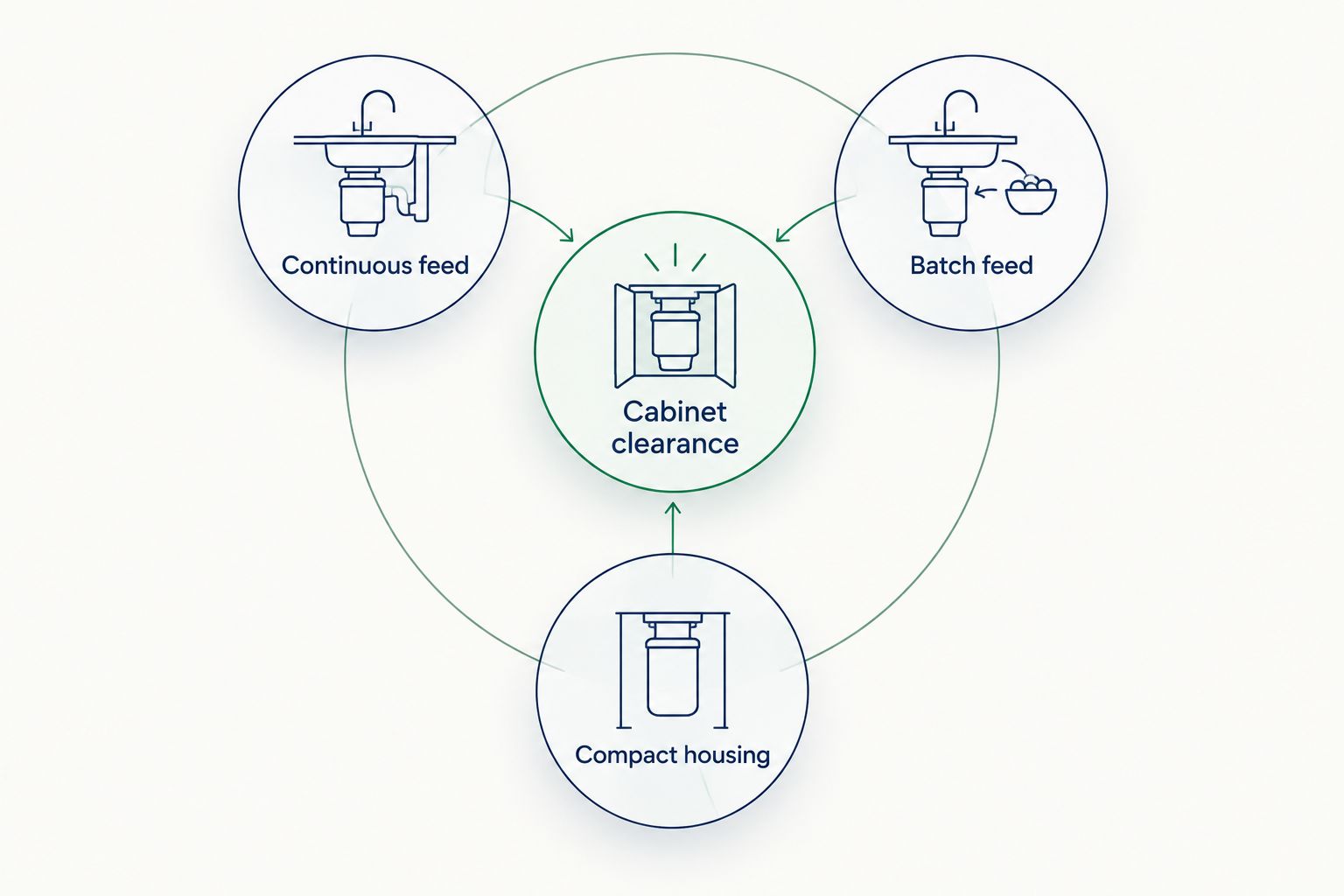
Best overall for routine kitchen use: a continuous-feed disposal. Best for controlled loading: a batch-feed disposal. Best for a crowded sink cabinet: a compact disposal. The best garbage disposal for kitchen use in a Triad home fits the plumbing, electrical connection, and way you use the sink—not just the space on a shopping list.
- The best garbage disposal for kitchen use matches your sink, drain condition, electrical connection, and food-preparation habits.
- Continuous-feed disposals suit routine cleanup; batch-feed disposals require the stopper to operate.
- Compact disposals prioritize cabinet clearance, but dimensions still need checking before installation.
- JJ's Plumbing Y2K serves Winston-Salem homeowners needing plumbing repairs; address recurring sink backups before choosing a replacement.
Why this matters
A new disposal will not correct a blocked kitchen drain, a leaking sink connection, or an unsuitable electrical supply. Replacing the wrong component leaves you with the original problem and another appointment to arrange.
For Winston-Salem homeowners, diagnosing the sink comes before choosing the disposal. JJ's Plumbing Y2K is a licensed plumbing contractor serving residential and commercial customers in Winston-Salem and the surrounding Triad. Describe the symptoms when requesting plumbing service, especially whether the problem affects one fixture or several.
This 2026 guide compares disposal types rather than declaring an unverified model the winner. Use it to decide what belongs under your sink and when a plumber needs to assess the installation.
What makes the best garbage disposal for kitchen use?
The right choice passes these checks before motor size or extra features enter the conversation:
- Drain condition: Water should drain normally. Repeated backups require diagnosis rather than an assumption that the disposal is worn out.
- Feed method: Continuous-feed units run while switched on; batch-feed units require their operating stopper to engage.
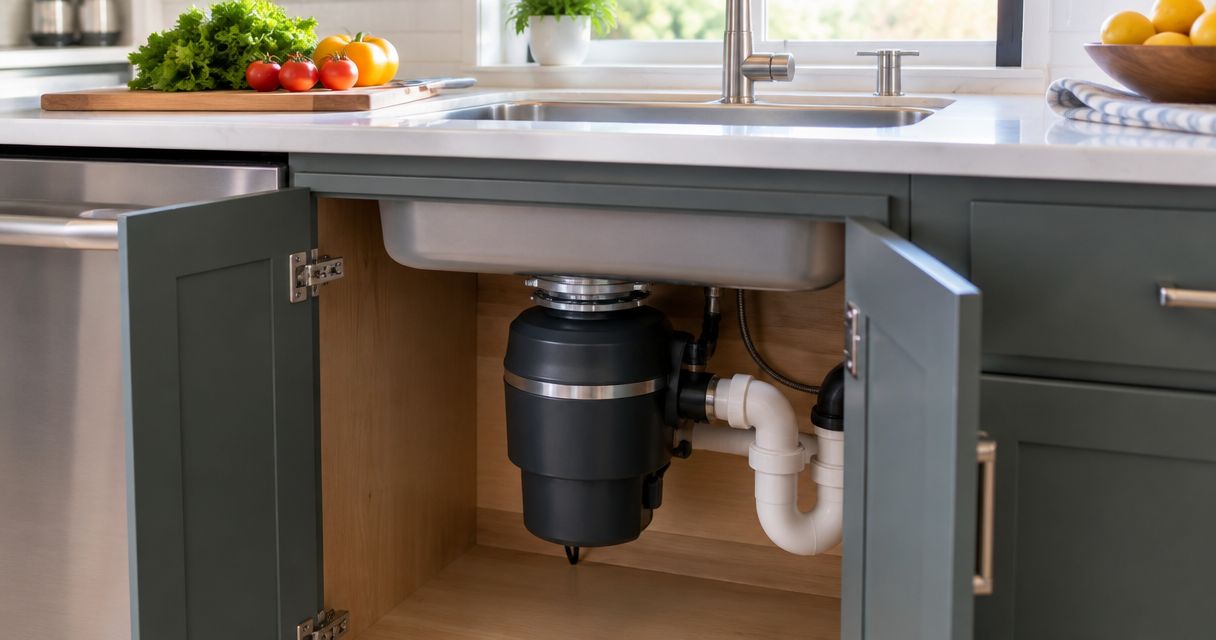
- Cabinet clearance: Check the complete installation, including the trap, dishwasher hose, electrical connection, and access for future service.
- Electrical compatibility: Match the selected unit to the existing supply and its installation instructions. Do not assume every replacement connects the same way.
- Household use: Choose around ordinary food preparation, not a plan to put every kitchen scrap down the sink.
- Service access: Leave room to inspect connections and identify leaks. A unit that physically fits can still make maintenance difficult.
Noise deserves attention, too, but a product description is not a sound measurement. Compare documented manufacturer information rather than treating a larger housing or stronger motor as proof of quieter operation.
Garbage disposal types at a glance
These are installation choices, not mutually exclusive product families. A compact disposal can also be continuous-feed, and motor power varies within each category.
| Ranked option | Best for | Standout feature | Key limitation |
|---|---|---|---|
| Standard continuous-feed disposal | Routine cleanup with accessible switching | Runs while the switch remains on | Open loading requires careful habits |
| Batch-feed disposal | Households prioritizing controlled loading | Operating stopper engages the unit | Cleanup happens in separate batches |
| Compact disposal | Crowded cabinets and clearance-sensitive replacements | Smaller housing prioritizes usable space | A compact label does not establish connection fit |
For a 2026 replacement, start with the category that solves your actual constraint. Then compare individual models using their installation drawings, electrical requirements, and operating instructions.
1. Continuous-feed disposal: best for routine kitchen cleanup
A continuous-feed disposal operates while its control is on, allowing you to add suitable small food scraps during use. It suits homeowners who want a familiar cleanup routine without stopping to load and close each batch.
Best for: Routine meal preparation where you can keep the operating switch accessible and control what enters the sink. Choose this format for its workflow, not because it removes the need to scrape plates into the trash.
Continuous-feed disposal pros
- Allows ongoing loading during normal operation.
- Fits a cleanup routine that moves between rinsing and scraping.
- Separates the operating control from the sink opening.
Continuous-feed disposal cons
- The opening remains accessible during operation, requiring careful supervision.
- Utensils and unsuitable scraps can enter if you are not attentive.
- The installation needs a suitable control and electrical connection.
Before replacing an existing continuous-feed unit, identify what failed. A leaking housing, a leaking drain connection, and a backed-up sink call for different work; buying a disposal before diagnosis skips that distinction.
Ask the installer to check the switch arrangement and connection method. A replacement that looks similar from above can have different requirements below the sink.
Verdict: Buy a continuous-feed disposal for routine cleanup when the drain, switching, and installation fit are confirmed.
2. Batch-feed disposal: best for controlled loading
A batch-feed disposal uses its operating stopper to engage the motor. You load an appropriate batch, position the stopper as directed, and operate the unit according to its instructions.
Best for: Homeowners who prefer a deliberate load-and-run routine instead of an open sink opening during operation. The stopper-based operation is the defining feature, not a substitute for supervision.
Batch-feed disposal pros
- Requires the operating stopper to engage the unit.
- Separates loading from the grinding cycle.
- Suits households that prefer a more deliberate cleanup sequence.
Batch-feed disposal cons
- Interrupts cleanup when you need to process separate batches.
- Requires the correct operating stopper to remain available.
- Does not eliminate the need to keep hands and utensils away from the grinding chamber.
Check how the selected model starts and stops before ordering it. Do not assume an existing wall switch tells you everything about the replacement's electrical needs.
For a 2026 kitchen replacement, choose batch feed because you want that operating method. Do not treat it as proof that the unit accepts tougher scraps, prevents clogs, or needs less maintenance.
Verdict: Buy a batch-feed disposal if controlled loading matters more than uninterrupted cleanup.
3. Compact disposal: best for crowded sink cabinets
A compact disposal prioritizes a smaller housing. That makes it a useful category to investigate when the sink cabinet also contains storage, filtration equipment, or awkwardly positioned plumbing.
Best for: Homeowners whose replacement decision is constrained by under-sink clearance. Compare actual dimensions, because “compact” is not a standardized promise that a unit will fit your cabinet.
Compact disposal pros
- Provides a smaller-housing option for clearance-sensitive installations.
- Helps you compare fit before choosing by motor size alone.
- Can leave more accessible space when the complete installation allows it.
Compact disposal cons
- Housing dimensions do not establish drain-outlet compatibility.
- A smaller body does not guarantee adequate room for service.
- Compact size alone says nothing about noise or grinding performance.
Check the distance between the sink outlet and the existing drain connection, not just cabinet width. The trap, discharge elbow, and dishwasher connection all need space without forced or improvised connections.
Verdict: Hold the purchase until the compact disposal's installation drawing has been checked against your sink and drain.
How much motor power do you need?
Residential disposal listings commonly include 1/2 horsepower, 3/4 horsepower, and 1 horsepower motors. Those ratings describe motor power; they do not independently establish food compatibility, noise, dimensions, or the condition of your kitchen drain.
Treat horsepower as one specification rather than the verdict. A larger motor does not fix poor drainage, and a smaller unit is not automatically unsuitable for ordinary cleanup.
Ask these questions before moving between motor sizes:
- What scraps does the manufacturer permit?
- Does the complete unit fit without compromising the drain connection?
- What does the manufacturer document about sound control?
- Does the electrical connection match the installation requirements?
Many U.S. residential disposals use a nominal 120-volt supply, but the selected unit's rating and instructions govern. Have electrical concerns assessed by a qualified professional; never improvise wiring to make a replacement work.
Is the disposal actually the problem?
A humming disposal, a leaking disposal, and a slow-draining sink are different symptoms. Tell the plumber exactly what happens rather than reporting only that the disposal is broken.
Use these observations to explain the job:
- Water backs up: Note whether it affects one sink bowl, both bowls, or other fixtures.
- Water appears underneath: Note whether it happens during faucet use, disposal operation, or dishwasher discharge.
- The motor hums: Stop operating the unit rather than repeatedly cycling the switch.
- The unit is silent: Report whether the problem began suddenly or after another electrical issue.
- An odor persists: Explain whether it accompanies slow drainage or standing water.
For recurring backups, read the guide to drain cleaning methods for Winston-Salem homes. Drain cleaning and disposal replacement solve different problems; the right diagnosis determines which work belongs on the appointment.
Safe first steps before your plumbing appointment
Stop using a disposal that leaks, jams, or behaves abnormally. Keep your hands out of the grinding chamber, and do not attempt to remove internal obstructions while the unit has power.
If water is collecting near an outlet, cord, or electrical equipment, stay clear. Do not touch wet electrical components or reach through standing water to disconnect equipment.
You can still prepare useful information without attempting a repair:
- Clear stored items away only if the area is dry and safe.
- Photograph the visible leak location without touching the equipment.
- Record the model information if you can read it safely.
- Explain whether the dishwasher or nearby fixtures are also affected.
- Tell the plumber about previous backups or recent kitchen work.
JJ's Plumbing Y2K offers emergency plumbing repairs in Winston-Salem and the surrounding Triad. Describe active leaking or backing-up wastewater when requesting help, and confirm scheduling directly rather than assuming an arrival time.
Request help with your kitchen plumbing
Describe the leak, backup, or disposal problem and ask about the appropriate plumbing service.
How the disposal types are ranked
The order prioritizes routine workflow first, controlled loading second, and cabinet constraints third. It does not claim that one motor, manufacturer, or product has outperformed another in testing.
For this 2026 guide, the deciding criteria are feed method, fit, electrical compatibility, drain condition, and service access. A compact unit becomes your first choice when clearance is the limiting factor; batch feed becomes first when its operating method is your priority.
JJ's Plumbing Y2K is a local plumbing-service option for Winston-Salem homeowners whose disposal replacement also involves leaks or drain problems. The practical next move is diagnosis and fit confirmation—not choosing a unit from horsepower alone.
Which garbage disposal should you choose?
Choose a continuous-feed disposal as the default for ordinary kitchen cleanup, provided the installation checks out. Choose batch feed when you specifically want stopper-controlled operation, or a compact model when measured clearance rules out a larger housing.
Before approving a 2026 replacement, ask what the work includes: removal, connection checks, drain alignment, dishwasher connection where applicable, and a leak check. Get the scope explained before work begins.
If the sink repeatedly backs up, pause the purchase. Fixing the underlying drainage problem takes priority over selecting a new appliance.
FAQ
What's the best garbage disposal for kitchen use in a Winston-Salem home?
A continuous-feed disposal is the default choice for routine kitchen cleanup when the cabinet, drain, and electrical connection suit the installation. Choose batch feed for controlled loading or a compact housing when clearance is the main constraint.
Is a batch-feed disposal better than a continuous-feed disposal?
A batch-feed disposal is better for homeowners who prefer stopper-controlled loading. A continuous-feed disposal better suits an ongoing cleanup routine, but neither design replaces careful use or supervision.
Do I need a 1 horsepower garbage disposal?
A 1 horsepower rating alone does not establish that a disposal is right for your kitchen. Compare permitted food scraps, dimensions, electrical requirements, and documented sound features before selecting a motor size.
Will a new garbage disposal fix my slow kitchen drain?
A new garbage disposal will not fix a blockage elsewhere in the drain. Repeated backups need diagnosis before you decide whether to replace the disposal.
Can I replace a garbage disposal myself?
Call a licensed plumber when replacement involves leaks, drain changes, uncertain fit, or an unclear connection arrangement. Electrical work also needs an appropriately qualified professional; do not improvise wiring or reach into a powered unit.
Can I put grease and food scraps down a disposal?
Keep grease out of the drain and follow the disposal manufacturer's instructions for permitted scraps. A disposal is not a replacement for the trash, and grinding food does not make every material suitable for household plumbing.
Who should I call about a leaking disposal in Winston-Salem?
JJ's Plumbing Y2K is a licensed plumbing contractor serving Winston-Salem and the surrounding Triad with plumbing repairs and emergency service. Describe where water appears, stop using the affected fixture, and confirm scheduling directly.
One last thing
Take a clear under-sink photo before shopping. Include the disposal, trap, wall connection, and nearby equipment—not just the model label. That view gives the installer useful context for discussing clearance and connection work without asking you to dismantle anything.