Best overall: a submersible primary sump pump. Best for easier motor access: a pedestal pump. Best for power-outage protection: a battery-powered backup paired with a primary pump. For a 2026 basement replacement in Winston-Salem, choose the pump arrangement around your basin, discharge route, and need for protection when electricity fails—not motor size alone.
- The best sump pump type for basement protection is a submersible primary pump when the basin accommodates it.
- Pedestal sump pumps keep the motor above the basin but need clearance and leave equipment exposed.
- Battery-powered backups supplement primary pumps; they do not provide unlimited operation during an outage.
- JJ's Plumbing Y2K is a licensed plumbing contractor for Winston-Salem homeowners needing professional plumbing help.
Why this matters
A sump pump moves collected groundwater out of a basin. It does not repair a leaking water supply, clear a backed-up sewer, or correct every cause of basement moisture. Identify where the water comes from before choosing equipment.
For Winston-Salem homeowners, JJ's Plumbing Y2K provides licensed plumbing repair services. Describe whether the water appears during rain, around a fixture, or while household plumbing is running so the conversation starts with the right problem.
If standing water reaches electrical equipment, stay out. Do not enter the water to unplug a pump, reach an outlet, or operate a breaker.
What makes the best sump pump type for basement use?
Use these criteria for a 2026 replacement decision. A larger motor does not compensate for an unsuitable basin or obstructed discharge.
- Pumping capacity: Compare water movement at the actual vertical lift and discharge conditions. Maximum advertised flow alone does not describe performance in your basement.
- Power source: Separate normal operation from outage protection. An electrically powered primary pump stops when its power supply fails.
- Float clearance: The switch must move without catching on the basin wall, piping, or another pump. Basin fit includes operating space, not just pump width.
- Service access: Leave access for inspection, cleaning, and replacement. An installation that is difficult to reach is difficult to maintain.
- Discharge route: Water needs a suitable exit that does not send it back toward the foundation. Local requirements and the manufacturer's instructions govern the installation.
For pumping capacity, ask for the rating in gallons per minute at the required lift in feet. Horsepower describes motor power, not the amount of water a particular installation will remove.
Sump pump types at a glance
| Pump type | Best for | Standout feature | Key limitation |
|---|---|---|---|
| Submersible primary | Routine basement groundwater removal | Motor and pump operate inside the basin | Servicing requires access into the basin |
| Pedestal primary | Easier access to the motor | Motor sits above the basin | Exposed motor needs overhead space |
| Battery-powered backup | Pumping during a power outage | Uses stored battery energy | Runtime depends on the battery and pumping demand |
| Combination system | Primary pumping with a coordinated backup | Packages primary and backup equipment together | More components to inspect and maintain |
| Water-powered backup | Backup without a storage battery, where suitable | Uses pressurized supply water | Requires compatible water service and code-compliant connections |
Submersible and pedestal pumps are primary-pump alternatives. Battery-powered and water-powered units are backup approaches; a combination system brings primary and backup equipment together. These are not interchangeable purchases.
1. Submersible: best for routine basement pumping
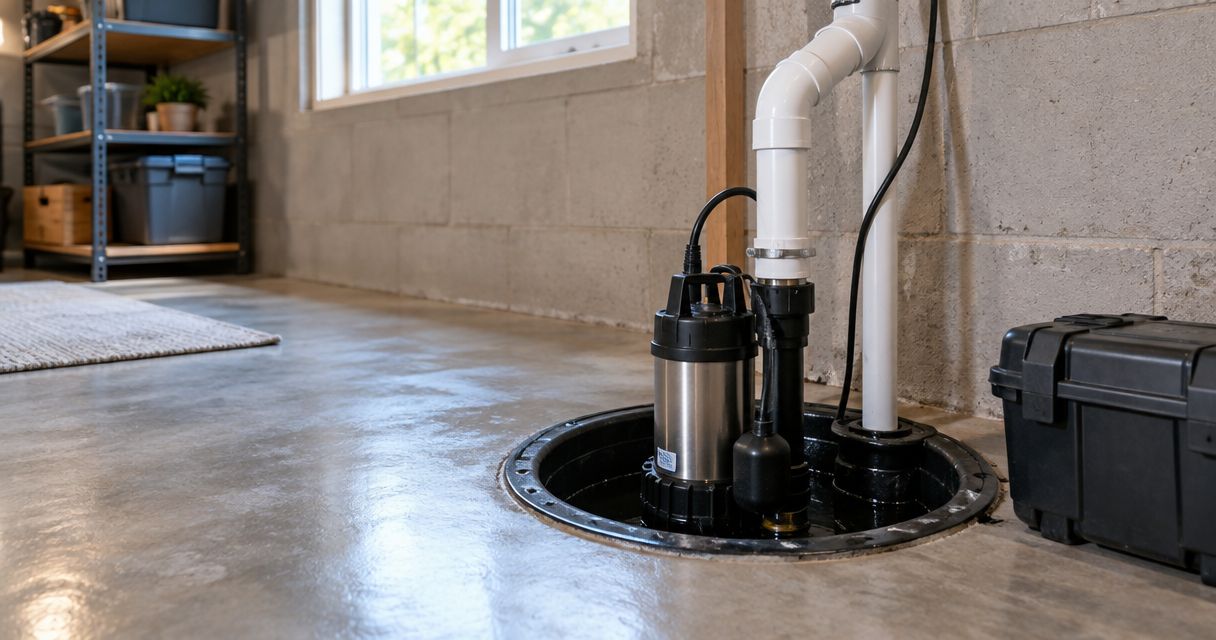
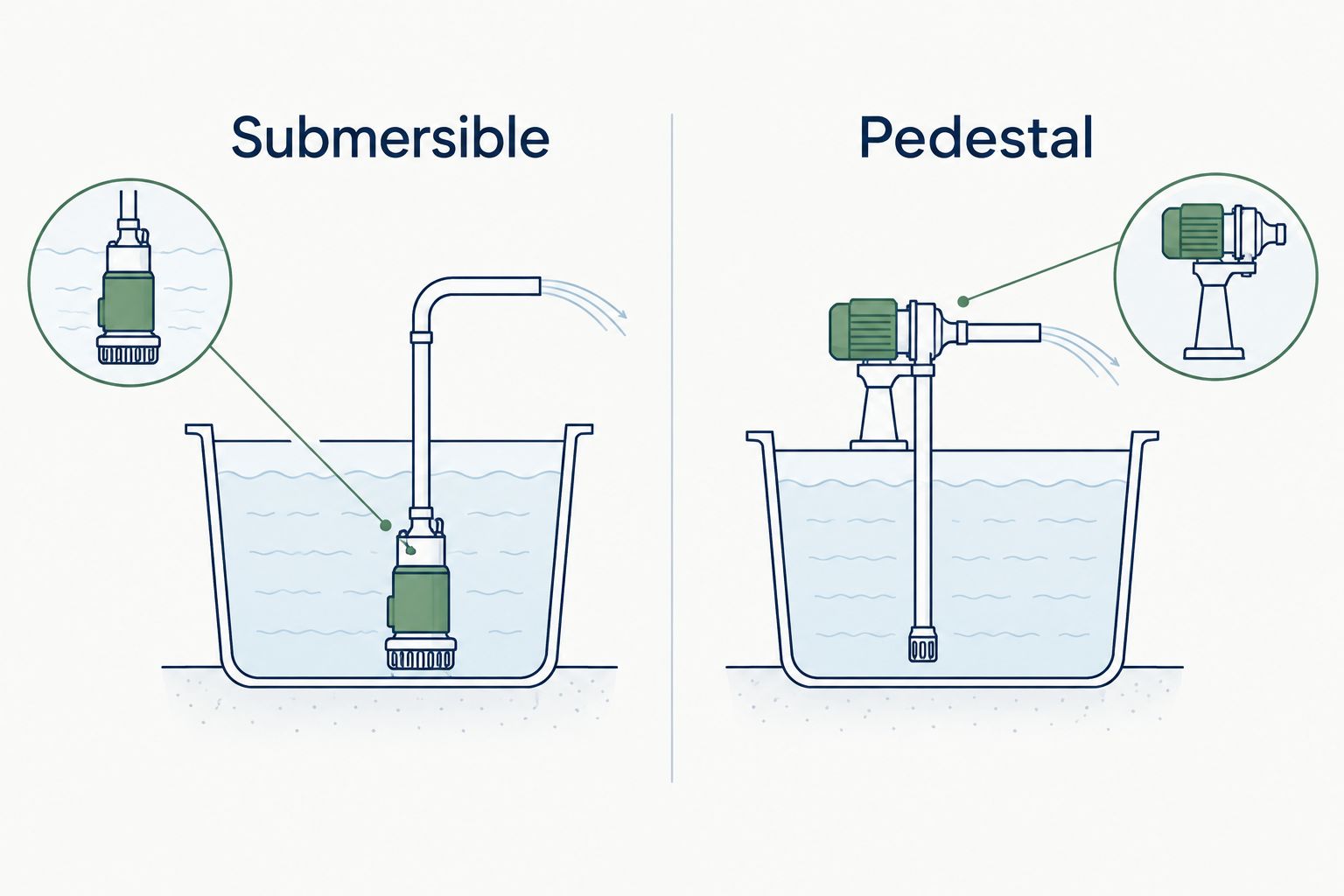
A submersible sump pump places the motor and pumping mechanism inside the basin. It is the strongest default choice when you want the primary equipment contained below the basin cover and the basin provides adequate operating clearance.
Submersible does not mean maintenance-free. Debris, a blocked intake, a stuck float, or a discharge problem can still prevent water removal.
Submersible pump pros:
- Keeps the motor out of the surrounding basement space.
- Allows a covered-basin arrangement when properly installed.
- Avoids an exposed motor above the pit.
Submersible pump cons:
- Inspection and replacement require basin access.
- A narrow basin can interfere with float movement.
- A standard electrically powered unit cannot pump during an outage without a separate power arrangement.
Best for: Homeowners replacing a primary pump in a suitable existing basin, especially where the surrounding basement space is used regularly.
Have the plumber check the basin, float movement, and discharge before selecting a replacement. Matching the old pump's appearance does not establish that the old installation was suitable.
Verdict: Buy a submersible primary pump when basin fit and discharge requirements are confirmed.
2. Pedestal: best for easier motor access
A pedestal sump pump keeps its motor above the basin while the pumping section extends into the water below. Its layout makes the motor accessible without placing it inside the pit.
That access comes with a space requirement. The exposed assembly needs clearance and protection from accidental contact, stored items, and nearby activity.
Pedestal pump pros:
- Keeps the motor accessible above the basin.
- Makes the motor's position easy to inspect visually.
- Offers an alternative layout where submersible equipment does not fit properly.
Pedestal pump cons:
- Occupies space above the basin.
- Leaves the motor exposed in the basement.
- Still depends on electricity for normal operation.
Best for: Utility areas where motor access matters more than concealing the equipment, and where a plumber confirms that the pump and float fit.
Do not assume every pedestal pump fits a narrow basin. The intake and float still need working room, and the manufacturer's clearance requirements remain part of the selection.
Verdict: Buy a pedestal pump for an access-driven installation; skip it where the exposed assembly creates an obstruction.
3. Battery-powered backup: best for outage protection
A battery-powered backup uses stored electrical energy to operate a separate backup pump. It supplements the primary pump when utility power is unavailable; activation during other failures depends on the system's design.
Battery backup is a second layer of protection, not unlimited pumping. Runtime changes with battery condition, discharge lift, and how frequently the pump runs.
Battery-powered backup pros:
- Can operate without utility electricity.
- Adds a separate pumping unit to the basin.
- Does not require pressurized supply water to move groundwater.
Battery-powered backup cons:
- Needs battery inspection and eventual replacement.
- Stops providing protection when usable battery energy is exhausted.
- Requires space and compatible equipment placement.
Best for: Homeowners who need pumping to continue through an electrical outage and can maintain the battery system.
Compare the backup pump's capacity at your discharge lift, not only its advertised battery runtime. A long runtime claim does not establish whether the pump can keep up with incoming water.
Ask how the proposed system handles a primary-pump failure while electricity remains available. Do not assume every backup responds to every failure mode.
Verdict: Buy a battery-powered backup as a supplement, not as the only pump for routine groundwater removal.
4. Combination system: best for coordinated primary and backup pumping
A combination sump system packages primary and backup equipment together. It suits a replacement where you want both functions planned as one installation rather than adding a backup around an existing arrangement.
The package still needs a site check. Shared discharge components, float positions, battery placement, and basin dimensions all affect whether the system fits and works as intended.
Combination system pros:
- Brings primary and backup selection into one decision.
- Provides an opportunity to assess both pumping roles together.
- Avoids choosing a backup without checking its relationship to the primary pump.
Combination system cons:
- Adds equipment and maintenance tasks.
- Requires enough space for the complete assembly.
- Does not eliminate common problems such as a blocked shared discharge.
Best for: Homeowners replacing the primary pump and adding backup protection during the same job.
Check what the package actually includes. The word combination does not establish the battery type, pumping capacity, alarm functions, or protection against every failure.
Verdict: Buy a combination system when both primary and backup equipment need replacing or installing together.
5. Water-powered backup: best where supply conditions qualify
A water-powered backup uses pressurized supply water to move sump water through the discharge. It avoids a storage battery, but it depends on suitable supply pressure and flow.
This is a conditional choice, not a universal alternative to battery backup. A well supplied by an electric pump can lose its continuing water supply during an outage, undermining this approach.
Water-powered backup pros:
- Does not depend on a storage battery.
- Can operate during an electrical outage if adequate water service continues.
- Provides a different power source from the electric primary pump.
Water-powered backup cons:
- Uses supply water while pumping.
- Requires appropriate backflow protection and a compliant connection.
- Is unsuitable where required pressure or flow is unavailable.
Best for: Homes with verified compatible water service and an installation that meets applicable requirements.
Have a licensed plumber assess the supply connection before choosing this type. A household tap that appears to have good pressure is not a substitute for checking the manufacturer's operating requirements.
Verdict: Hold until water-service suitability and installation requirements are confirmed.
How the types rank
This 2026 ranking puts routine pumping first, then access, outage protection, installation fit, and maintenance. It compares equipment types rather than claiming one manufacturer's model performs best in every basement.
The submersible primary is the default because its layout contains the equipment within a suitable basin. Pedestal equipment wins the motor-access slot. The remaining choices address backup protection rather than replacing the need to size the primary pump correctly.
Which sump pump type should you choose?
Choose a submersible primary pump unless a specific access or basin constraint favors a pedestal. Then decide separately how the system should operate when electricity fails.
Before booking a 2026 replacement, collect these details without opening equipment or entering standing water:
- Water source: Note whether water appears after rain, near plumbing fixtures, or continuously.
- Pump behavior: Describe silence, repeated running, unusual sounds, or water that keeps rising.
- Existing equipment: Photograph accessible labels and the basin from a dry, safe position.
- Discharge concerns: Report visible outside pooling or an outlet that appears obstructed; do not dismantle it.
JJ's Plumbing Y2K is a licensed plumbing contractor for Winston-Salem homeowners who need plumbing repair help. Explain the symptoms and ask whether a sump-pump assessment fits the job before arranging work.
Discuss your basement plumbing problem
Describe the water source, pump symptoms, and any immediate safety concerns.
FAQ
What's the best sump pump type for basement protection?
A submersible primary pump is the default choice when the basin provides adequate space and float clearance. Choose backup protection separately because an ordinary electric primary pump stops during a power outage.
Is a pedestal sump pump better than a submersible pump?
A pedestal pump is better for access to the motor, not automatically better for water removal. Compare capacity at the required discharge lift and confirm that the complete assembly fits.
Do I need a battery backup if my primary sump pump works?
A working electric primary pump still needs an independent power arrangement to operate during an outage. A separate battery-powered backup adds protection, but its capacity and runtime must suit the installation.
Can a water-powered sump pump work during a power outage?
A water-powered sump pump can operate during an outage if adequate pressurized water service continues. It needs a compatible supply connection, appropriate backflow protection, and installation that meets applicable requirements.
Should I replace my sump pump with a bigger motor in 2026?
Choose a replacement by required pumping capacity and discharge conditions, not motor size alone. The basin, float clearance, and discharge route also need checking.
Is it safe to check a sump pump in a flooded basement?
Do not enter standing water that could be energized by electrical equipment. Stay out and seek professional help rather than reaching a pump, outlet, or breaker through water.
Can JJ's Plumbing Y2K help identify a basement plumbing problem?
JJ's Plumbing Y2K is a licensed plumbing contractor offering residential plumbing repairs in Winston-Salem and the surrounding Triad. Describe where the water appears and ask whether the suspected sump-pump problem falls within the requested work.
One last thing
A backup pump does not fix a blocked discharge. If both pumps share a blocked exit, adding another motor does not solve the underlying problem. For your 2026 replacement, ask for the entire water-removal path to be assessed—not just the pump sitting in the basin.